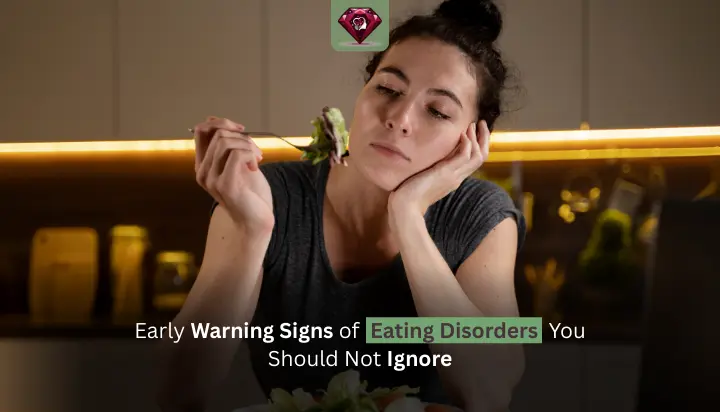
You can learn more than you think at family dinners. You may find it easy to assume that a loved one is stressed or just busy when they stop eating, skip meals, or go missing after eating something. But these small changes can sometimes be signs that someone is starting to have an eating disorder.
Eating disorders can affect anyone, regardless of age, gender, or background. Recognizing them early can greatly improve the chances of recovery. We will discuss the red flags that parents tend to notice first, both with the beginning symptoms of anorexia and those of bulimia and binge eating disorder. We will also provide you with practical steps on what to do in order to react with care.
Understanding Eating Disorders: A Quick Overview
Eating disorders are serious mental illnesses that stem from emotional difficulties, poor self-worth, and poor body image. They are neither intentional choices nor phases. They should be treated with kindness and professionalism.
Some common types of eating disorders are:
- Anorexia nervosa is a condition in which people are very afraid of gaining weight and severely limit their food intake
- Bulimia nervosa is when you binge eat and then throw up or work out too much
- Binge-eating disorder is when you eat too much over and over again, along with feeling guilty about it
The signs of an eating disorder should be detected as soon as possible. Unless such issues are addressed, they may impact your health, emotions, and relations with your family. The good news? It is definitely possible to get better with the right care and support.
Common Myths About Eating Disorders That Delay Recognition
One reason people don’t notice early signs of eating disorders is because of this: The false ideas that people have about what these conditions are really like.
The three prevalent myths and the facts that debunk those myths are as follows:
- Myth: It has to do with vanity and the desire to have a good appearance. Fact: Eating disorders often happen when one is struggling to cope with intense emotions, pressures, or has to exert control.
- Myth: Eating disorders only occur amongst very thin people. Fact: Eating disorders may occur in any person regardless of their size. Many of us have many issues within that are not easily visible.
- Myth: It will resolve on its own. Fact: Eating disorders can be helped in early age to prevent severe health complications, such as a lack of necessary nutrition and breaking relationships.
Communicating with each other without judging one another is one of the most appropriate things that families can do. When you approach the subject with curiosity instead of blame, you create the safety that is needed for honest conversation and, in the end, recovery.
Physical Early Warning Signs to Watch For
When eating habits are off, the body often sends quiet signals. However, these can be easy to brush off as normal ups and downs, like “growing pains” in kids or “just stress” in adults.
Watch out for these patterns:
- Weight changes that you can’t explain, like losing weight, gaining weight quickly, or staying the same, even though you try to change it
- Constantly feeling cold, tired, or lightheaded, which could mean that the body isn’t getting what it needs
- Changes in your skin, hair, or nails that are easy to see, like dryness, thinning hair, or nails that break easily
- Stomach problems that don’t go away, like feeling bloated, constipated, or sick after eating
These could happen in small ways in a family setting: A teenager who skips breakfast and then gets headaches while out on the weekends, or an adult relative who starts wearing layers of clothes even when it’s warm, which you notice when you hug them. These aren’t always big problems, but when they last for a long time, it’s important to be kind and pay attention to them.
Learn more: What’s the Link Between Control, Eating Disorders, and Social Detachment
Emotional and Behavioral Red Flags
The emotional aspect usually begins to appear in daily habits and moods and becomes part of the routine till the trends become difficult to overlook.
Among the main details to observe, one should note:
- Increasing concern or regulations of food, such as the compulsive scanning of all labels or avoiding eating with other people
- Using excuses like “I’m not hungry” or “I ate earlier,” to avoid family meals and spending time with them
- Eating behavioral changes are associated with either pre- or post-meal crankiness or heavy guilt
- Secretive behaviors like wrappers hiding or dragging on in the bathroom immediately after eating
These may appear in various forms based on the age: For younger kids, it might start as being very picky and get worse. For adults, it might look like super-strict “healthy” routines that take over their lives. The most important thing is to look for consistency, as individual has bad days, but constant changes are the reason to pay attention to them.
Social and Relational Indicators in Family Settings
Eating disorders are not kept secret; they become personal, and family and friends can feel the change early.
Some signs are:
- Avoiding food situations involving joining shared meals and family events, thereby spending more time alone
- Unusual attention to what other people are consuming, such as insisting on portions or calories at the table
- Getting nervous when talk of food or body issues comes up, and quickly getting defensive or changing the subject
- Distancing from things that the whole family enjoys and toward things that are done alone, and focusing on the body
It can be seen as growing independence among adolescents or busy adult lives. Still, if it is consistent and makes them distant, they often show a deeper need for connection and understanding. Those families who observe this can respond by calling with warmness and transforming the possible isolation into closeness.
How Early Signs Differ Across Types of Eating Disorders
To help spot what’s happening, here’s a side-by-side look at how signs can vary:
| Disorder Type | Key Early Signs | Family Impact |
| Anorexia Nervosa | Slow withdrawing of foods, ritualistic eating (such as cutting tiny bites), excessive self-checking of the body | Meals tend to be tense, as if one is withdrawn or too concerned with control |
| Bulimia Nervosa | Secret disappearance after eating, food hiding spots, cheek fullness noticeable due to purging | Family may discover wrappers, patterns of bathroom use, and trust may feel strained |
| Binge-Eating Disorder | Eating a lot, then feeling ashamed; no apparent “compensation” following | Emotional distance after episodes; the family may sense that they feel guilty and depressed, but without an obvious reason behind it |
Picture a family spotting hidden treats versus someone quietly skipping lunches; these differences help guide compassionate next steps without jumping to conclusions.
Early Warning Signs in Adults, Men, and Midlife: Why They Can Be Harder to Spot
Eating disorders do not go away when one grows up; they may develop or reappear in adulthood, or in men, or during the middle years (somewhere in the 40s and above). They are often missed because the signs look like normal life stressors like work demands, aging changes, or social expectations (for example, men feeling like they shouldn’t talk about body issues).
In these groups, signs can be less obvious or hidden:
- Emotional and Behavioral: A change toward “performance” eating, like obsessively preparing meals for gym results while secretly cutting calories, or using exercise as the main way to deal with stress. The strict routines can be portrayed as discipline or optimization instead of being labeled as restriction.
- Physical: This gradual loss of muscle (in men), chronic fatigue blamed on being old, or stomach upsets attributed to job stress or IBS.
- Social and relational: Not going out to a couple/family dinner with such reasons as late working night, traveling, experiencing sudden changes in devoting much attention to appearance (it can be new grooming habits, emphasizing wardrobe) without significant weight changes.
Families (spouses, partners, or adult children) are often the first to notice things like a partner who always skips meals with the family or a parent who is unusually critical of family recipes. These are good times to check in with someone in a gentle way, like by asking, “How are you feeling energy-wise these days?” People of all ages can recover, and often with methods like CBT or family therapy sessions that are tailored to their stage of life.
Self-Reflection Tools for Families
If something doesn’t feel right, a gentle self-check can help you think clearly without putting too much pressure on yourself. These aren’t tools for diagnosing; they’re just ways to pay attention.
Ask yourselves:
- Has there been a sudden change toward “clean” or limited eating that now leaves out favorite family meals?
- Do you brush off or feel uncomfortable when someone compliments your looks?
- Do conversations about health or food make you want to avoid them or be defensive?
One useful idea is to keep a simple family wellness journal. You don’t have to write down every meal, but you can write down changes in mood or habits over the course of weeks. Be curious and careful, and try to understand instead of blame.
When to Take Action: Next Steps for Concerned Families
Seeing these signs is a sign of caring, and taking action on them right away shows strength. Here’s when and how to go on:
- If patterns stay the same for weeks or get stronger
- When you start to feel dizzy, faint, or have cycles that don’t work right
- If emotional withdrawal starts to hurt your school, work, or close relationships.
Start gently with phrases like “I’ve noticed you’ve seemed tired lately—I’m here if you want to talk.” After that, go to your primary care doctor for a quick check-up. At Ruby Reflections Mental Health, we use family-based methods to give personalized evaluations that help everyone involved catch these signs early.
Prevention Strategies and Building Healthy Habits
Making a good environment from the start is the best way to keep yourself safe.
Everyday Family Practices
- Have meals together without rules or comments about how much food you should eat
- Be honest about what the media says and how it changes how people think about food and their bodies
Promoting Positive Body Image
- Do not focus on appearance; instead, talk about their abilities, like how kind, creative, or hard-working they are
- Give rewards that aren’t food for doing well to keep the celebrations happy
Education and Community
Look for family-friendly workshops or resources that help everyone learn more about mental health and make it a normal part of conversation.
Conclusion
The first signs of eating disorders are subtle and frequently hard to notice, but if you pay attention with love, you can help people get help sooner and find better paths ahead. The first step toward healing for the whole family is to notice these changes, even if they are just small changes in behavior or emotional distance.
There is so much hope. Many people have gotten through these problems and come out stronger, with better relationships with food and themselves. If this resonates with you, please take a moment to think about it and get in touch. You can get one-on-one help from Ruby Reflections Mental Health. You’re not alone, and taking care of this really does help your health.
FAQs
What if the signs are mild or look like normal stress or dieting?
It’s normal for things to change a little, but if they keep happening or affect your daily life, it’s a good idea to check in. Paying attention early can stop things from getting worse.
Do early signs always mean you have an eating disorder?
Not all the time. Some behaviors, such as disordered eating, still affect health. The goal is to help people deal with their patterns with kindness before they get worse.
How do I talk about it without making things worse?
Be passionate and move with “I” statements: “I have observed that you have been acting more tired recently,” and “I am concerned,” as I care, and we can discuss how you feel. Listen without judging, and offer help if they don’t want to talk.