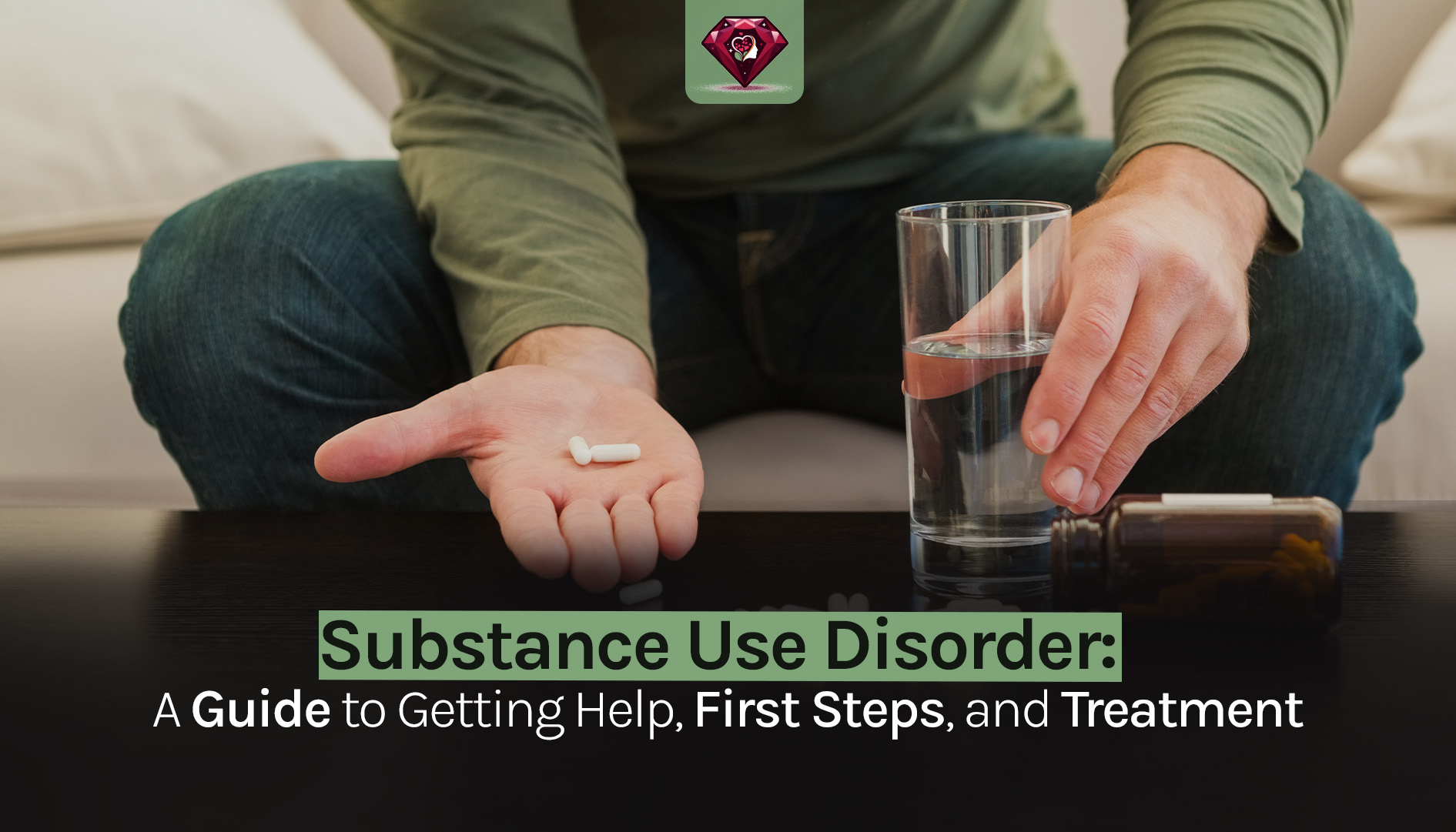
You may feel like something is wrong deep down, whether it’s you or someone you care about battling with drugs. You are not the only one. Over 48 million Americans struggle with substance use disorder (SUD) every year, but shockingly, 95% of them don’t get the help they need. This is why this guide is essential: to help people with substance use disorders find other ways to get help.
We discuss the first steps to take to recover from SUD, effective treatments, and expert opinions from the National Institute on Drug Abuse (NIDA). Remember that SUD isn’t a flaw; it’s a disease that can be treated.
Understanding Substance Use Disorder
Let’s go over the basics: What is Substance Use Disorder (SUD)? People with this illness take drugs even though they know they will hurt themselves. According to the DSM-5, SUD changes the brain’s reward system, which makes people tolerant, go through withdrawal, and lose control.
SUD can hurt your health, your job, and your relationships. Drugs like alcohol, opioids (like fentanyl), stimulants, cannabis, and nicotine can cause problems that range from minor to grave.
NIDA’s most recent research shows that polysubstance use, or using more than one drug at once, like stimulants and opioids, is on the rise. This type of addiction is very harmful. This shows how important it is to help and evaluate people as soon as possible.
Recognizing the Need for Help: When to Take Action
Admit that you need help? That’s enough. Do I drink or use drugs to deal with how I feel? Have your friends or family told you they are worried?
SUD has many effects on families. Kids may have mood swings, and couples may have to deal with being too dependent on each other. Doing kind things is the best way to help: Bring your family and friends together for a calm talk about how to help instead of fighting.
First Steps to Getting Help for Substance Use Disorder
- Recognize the problem: Use the Transtheoretical Model to figure out how ready you are to change, from precontemplation to maintenance.
- Get in touch: Call a hotline, a trusted family member, or a doctor.
- Get a professional opinion: Talk to a mental health professional about your symptoms. Making a comprehensive history of your substance use will help you be more accurate.
What to Know About the Detox Process
Medical detox properly handles withdrawal symptoms, which usually last between three and seven days. Detox is merely the first step toward long-term recovery, even though drugs like buprenorphine can help. Families can make sure the surroundings are peaceful and keep an eye on how much water they drink. Furthermore, the recent NIDA updates talk about how to use apps to track vital signs with digital biomarkers for tailored treatment.
Treatment Options for Substance Use Disorder
The best treatment is personalized and often includes medicine, therapy, and support. NIDA data shows that full care increases the long-term recovery rate to 40–60%. Both inpatient treatment programs are very strict, and outpatient programs are more flexible.
Medication-Assisted Treatment (MAT)
Medication-Assisted Treatment (MAT) uses FDA-approved drugs like methadone for opioids and acamprosate for alcohol to lower cravings and cut the risk of relapse by 50%.
Behavioral Therapies for Addiction
CBT (Cognitive-Behavioral Therapy) and DBT (Dialectical Behavior Therapy) are two types of therapy that help people manage their feelings and change how they think about things that are bad for them. Family therapy helps you fix your relationships, and group counseling helps you learn new things from other people. If someone takes stimulants, contingency management is a beneficial way to reward them for staying sober.
Inpatient vs. Outpatient Rehab
People who need controlled detox and care around the clock should go to inpatient therapy. Outpatient programs are best for people who aren’t very sick. People in rural areas can now get these services more easily thanks to telehealth. Hybrid models are also using AI to keep track of how well patients are doing.
Recovery Support Groups
People who join support groups feel less alone because they get support from other people who don’t judge them. You can now go to these meetings without having to leave your house, thanks to modern recovery apps.
Navigating Long-Term Recovery and Relapse Prevention
Substance Use Disorder (SUD) is a lifelong problem, but it is possible to get better. Some people need ongoing therapy or help, while others don’t.
Understanding Relapse
Relapses, or going back to using drugs after a break, are common. They often require detox and a new start to the treatment cycle. Even though these relapses can be annoying, recent research indicates that they can improve long-term outcomes by 40%.
How to Succeed
- Take care of things that set you off: Use techniques like “urge surfing” to get over your cravings.
- Make a plan: Include exercise, healthy eating, and ways to deal with stress.
- Keep in touch: It’s very important to have a strong support system. Use apps to record how far you’ve come and to celebrate big wins.
Start your journey: Knowledge is what lets you heal. To start over today, check out our services. We offer comprehensive addiction and substance use treatment to support individuals on their path to recovery.
FAQs
What are the first signs that someone in your family has SUD?
Look for signs of changes, such as being secretive, having mood swings, or avoiding tasks. Take it easy.
Can you completely get rid of SUD, or must you live with it?
It lasts a long time, like diabetes, but good management can improve life.
How can families help someone get better without making things worse?
Set boundaries, encourage independence, and go to therapy. Try to understand instead of fixing it.