
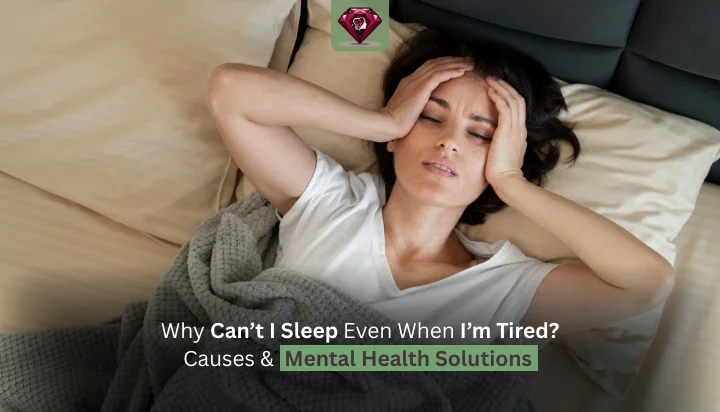
Introduction: The “Wired but Tired” Feeling
Your body is tired and ready for sleep after a long day. But as soon as your head hits the pillow, your thoughts start to race. Thoughts keep going around and around, worries stay, and sleep seems impossible. Your nervous system is on high alert, which is often a sign of mental health or everyday life problems. This isn’t laziness.
At Ruby Reflections Mental Health, we help people figure out these patterns and provide long-term, caring solutions. We help people and families find peace and energy by looking at how their minds, bodies, and daily worries are all connected. If you know why your body is ready for sleep but your mind isn’t, you can feel better and find ways to get better sleep.
What Is Insomnia?
Insomnia isn’t just a bad night of sleep; it’s a pattern where it’s always hard to fall asleep, stay asleep, or feel rested. It can be short-term (a few days or weeks) or long-term (months or longer), and it can affect both your body and mind.
Characteristic symptoms of insomnia are:
- Difficulty falling asleep despite feeling tired
- Frequent awakening at night
- Feeling unfreshened or worn out in the morning
- Irritability, inability to focus during the day, or lack of energy
Admitting that insomnia is more than a bad sleep will make you understand the importance of getting to the cause of the problem: stress, anxiety, depression, ADHD, or even past trauma.
The Mind-Body Disconnect: Why Exhaustion Doesn’t Equal Sleep
There is more to sleep than just being tired. It’s a time when you can relax because you know you’re safe. When there isn’t a safety indicator like that:
- Even when you’re not aware of it, your nervous system stays alert in a subtle way
- At night, hyperarousal keeps the mind racing
- No matter how tired you are, it can be hard to fall asleep
Your nervous system is still looking for “danger,” like a smoke detector that keeps buzzing long after the kitchen fire is out. This protective mode is helpful when there is a real threat, but at night, it keeps you from getting the deep sleep you need.
Hidden Mental Health Triggers That Keep You Awake
A lot of individuals are astonished at how ordinary mental and emotional routines can damage sleep without them knowing it.
| Mental Health Factor | How It Keeps You Awake |
| Unresolved Emotional Load | When things calm down, your brain plays back conversations, to-do lists, or family anxieties. |
| Anxiety Loops | When you worry about work, money, or loved ones, your mind makes up a bedtime narrative that won’t finish. |
| Depression | A low mood might make you tired throughout the day and break up deep sleep periods at night. |
| ADHD | Your mind builds mental fatigue during the day, and then it “dumps” rushing thoughts when your body calms down. |
| Trauma or Past Stress | The nervous system keeps defensive patterns in place, so the body is on alert even when things seem tranquil. |
Modern Life Factors That Amplify Sleep Problems
- Digital Overload: Notifications, screens, and late-night browsing make it hard for the mind to relax completely.
- Caregiver Load: Daily tasks that aren’t obvious (like planning meals, checking in on feelings, and making plans) add up and show up at bedtime.
- Changes in Life Stage: Becoming a parent, reaching a peak at work, or becoming an adult can all affect how the body gets ready for sleep.
When “Just Relax” Isn’t Enough
Signs that professional help might be useful:
- Sleeping far less than needed most nights
- Fog during the day that makes it hard to work, have relationships, or spend time with family
- Mood swings or irritability because of not getting enough sleep
- Using screens, food, or other habits to make yourself sleep
- A pattern that lasts for weeks or months
A lot of people have these problems, and they are easy to fix. The first step to real relief is to understand the root.
Gentle, Evidence-Based Steps You Can Try Tonight
These aren’t quick fixes, but they are good places to start:
1. Evening Brain Dump
Without judging yourself, write down your thoughts, make a list of things you need to do tomorrow, and then put it away with a simple phrase like “this can wait until morning.”
2. Body-First Wind-Down
Gentle stretching, progressive muscle relaxation, or slow belly breathing all start with physical sensations and then let the mind follow.
3. Safety Cue for Bedtime
Use one clear signal, like a lamp, a calming scent, or a note of thanks, to let your nervous system know it’s okay to rest.
4. Lifestyle Anchors
Regular meal times, getting up earlier, and a quiet bedroom all help to strengthen natural rhythms over time.
How Professional Care Supports Lasting Sleep
When the pattern keeps happening, mental health care looks at the root causes of problems, not just the symptoms. Many people can break the cycle with the help of CBT for Insomnia (CBT-I), supportive therapy, and personalized evaluations.
At Ruby Reflections Mental Health, we help people with insomnia in a specific way, including trauma-informed care and ways to help people with other mental issues. You can get this help through safe telehealth or in-person visits.
We design comprehensive, individualized plans that address the root cause. Check out our conditions treated to learn more.
Conclusion
When you are too tired and cannot sleep, it does not always have to do with willpower. Something is communicating to you through your body and mind, i.e., your mental health problems, the stress of day-to-day life, and the demands of your modern life.
Those connections will assist you in acquiring peaceful nights and new energy if you take small steps and seek professional help whenever necessary. You’re not alone in this, and change is possible.
If this guide speaks to you, share it with people you care about. For individualized help, check out Ruby Reflections Mental Health.
FAQs
Is it normal to be tired but not be able to sleep?
Yes. A lot of people feel “wired but tired,” and this is often linked to understandable patterns in their mental health or nervous system.
Can stress alone cause insomnia?
Of course. The stress you experience every day can keep the nervous system on alert, which makes it hard to relax fully.
What does ADHD have to do with being awake at night?
When you’re tired from thinking too much during the day, your racing thoughts often get worse right before bed.
When should I seek professional help?
If you have insomnia for weeks, it affects your daily life, or it makes you feel tired all the time, reaching out is a caring thing to do.