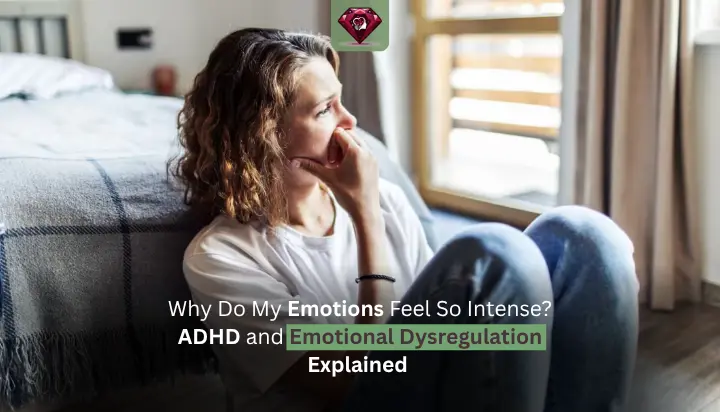
One minute you could be laughing at a stupid joke, and the next minute you could be struck down by a minute remark like a blow to the stomach. You question yourself, “Why am I behaving in this manner?” particularly as no one else appears to be bothered. You are likely to be familiar with emotional intensity if you have ADHD. Emotions are generally intense, and the brain’s natural “brakes” that allow you to stop, reason, and act evenly do not work in the same manner. This pattern, known as emotional dysregulation, is not about being too sensitive but about how emotional processing and control in ADHD differ from those of other individuals. Many people only realize this after years of confusion and self-judgment.
Ruby Reflections Mental Health assists individuals with ADHD and emotional intensity by providing them with helpful tips and caring guidance. In this guide, we will discuss the reasons behind feelings striking, triggers of feelings on a day-to-day basis, and softer tools to feel more stable.
The Hidden Reason Emotions Hit Harder with ADHD
ADHD (Attention-Deficit/Hyperactivity Disorder)is a neurological condition that affects attention, focus, and self-regulation. ADHDleads to intense emotions due to the functionality of the neurological system:
- Processing quickly: Emotions are perceived quickly and strongly.
- Delayed filtering: Brain areas that help you slow down and think are less effective, especially when you’re tired or stressed.
Imagine it as an emotional amplifier: the emotions are strong in the beginning, and then the volume control comes in later. This is aggravated by the presence of executive function exhaustion. Your day-long needs of handling tasks, choices, and concentration result in having less mental energy to handle your emotions at the end of the day.
The positive thing about this is that being aware of this can guide you to treat yourself with care rather than frustration, and small, consistent measures can guide you to handle intense feelings in the long run.
What Emotional Dysregulation Looks Like in Daily Life
Dysregulation does not always mean that emotional reactions are loud; sometimes it is a quiet, overwhelming feeling that leaves you guilty or exhausted.
At Home and in Family Life
- Routines or conversations can quickly go from calm to angry
- Too much noise, kids, or small messes can make you feel overwhelmed
- Crying or becoming furious over words that weren’t meant to hurt
- Need time alone to “reset.”
At Work or Daily Responsibilities
- Intense self-criticism after making mistakes or missing deadlines
- Highs of emotion following victory, then abrupt drops
- Getting stressed out when you have to do a lot of things at once
In Relationships and Social Settings
- Being sensitive to tone, facial expressions, or the feeling of being rejected
- Not getting along with partners, friends, or coworkers
- Hard to understand when responses are late or when there are distractions
Everyday Triggers That Amplify Emotions
In some cases, ADHD reliably makes sensations stronger:
- Being rejected or feeling like you’re being criticized; neutral or polite remarks can feel terrible.
- Changes or transitions that happen unexpectedly might make people angry or anxious.
- Too much sensory or mental stimulation, such as bright lights, loud places, or too many open tasks, makes things worse.
- Being tired or having a lot of emotional stress; end-of-day tiredness typically causes emotional “dumps.”
Why This Matters
Uncontrolled intensity has an impact on relationships, career, parenting, and self-esteem. Recognizing these patterns is the first step to:
- Lessening self-criticism
- Dealing with stress and feeling overwhelmed
- Building steady, caring responses
Gentle Steps to Manage Emotional Dysregulation
These useful tips help you put some space between how you feel and how you act:
- Name It to Tame It
Pay attention to how your body feels (tight chest, rapid heart). Say it softly, like “this is frustration.” Give it space by taking a slow breath.
- Body-First Reset
Put your hand on your chest or stomach and breathe slowly (4 counts in, 6 counts out). Soft stretches to relax the nervous system.
- Create Emotional Safety Cues
Repeated phrases like “I’m safe,” objects, or small routines tell the brain to relax.
- Build Daily Emotional Buffers
Short breaks for activity, soft limits, or quiet times stop things from building up.
For the best outcomes, do these steps while also being aware of your personal patterns. Small, consistent efforts over time can lead to meaningful and lasting emotional balance.
When Professional Mental Health Support Helps
If you are always feeling emotionally overwhelmed, you may need professional help. At Ruby Reflections Mental Health, we:
- Look into ADHD tendencies with supportive therapy
- Give personalized ways to deal with problems
- Provide psychiatric examinations for ADHD and other issues that co-occur at the same time
- Provide care through secure telehealth or in-person meetings
Check out our ADHD Support Page to find out more, or look at these other guides:
Conclusion
Having a lot of emotions with ADHD doesn’t mean you’re “too much.” It’s a clue that your nervous system works in a different way.
Understanding the pattern lets:
- More gentle self-care
- Better connections
- More power and control over daily lives
You can have steady emotions and quieter days if you understand, use the same strategies, and get help from professionals.
You aren’t alone; give this guidance to someone you care about. When you’re ready to move on, Ruby Reflections Mental Health is here for you.
FAQs
Is it normal for emotions to feel intense with ADHD?
Yes. ADHD brain wiring makes many adults feel things more strongly and quickly than most people.
How is emotional dysregulation different from a short temper?
A short temper goes away shortly. Dysregulation lasts longer, feels stronger, and is harder to change.
Can anxiety or depression make ADHD emotions worse?
Yes, for sure. Co-occurring disorders might lead to overlapping emotional patterns.
Do ADHD feelings become better with age or treatment?
Yes. Adults can respond more consistently with skills and techniques, even if thewiring stays the same.