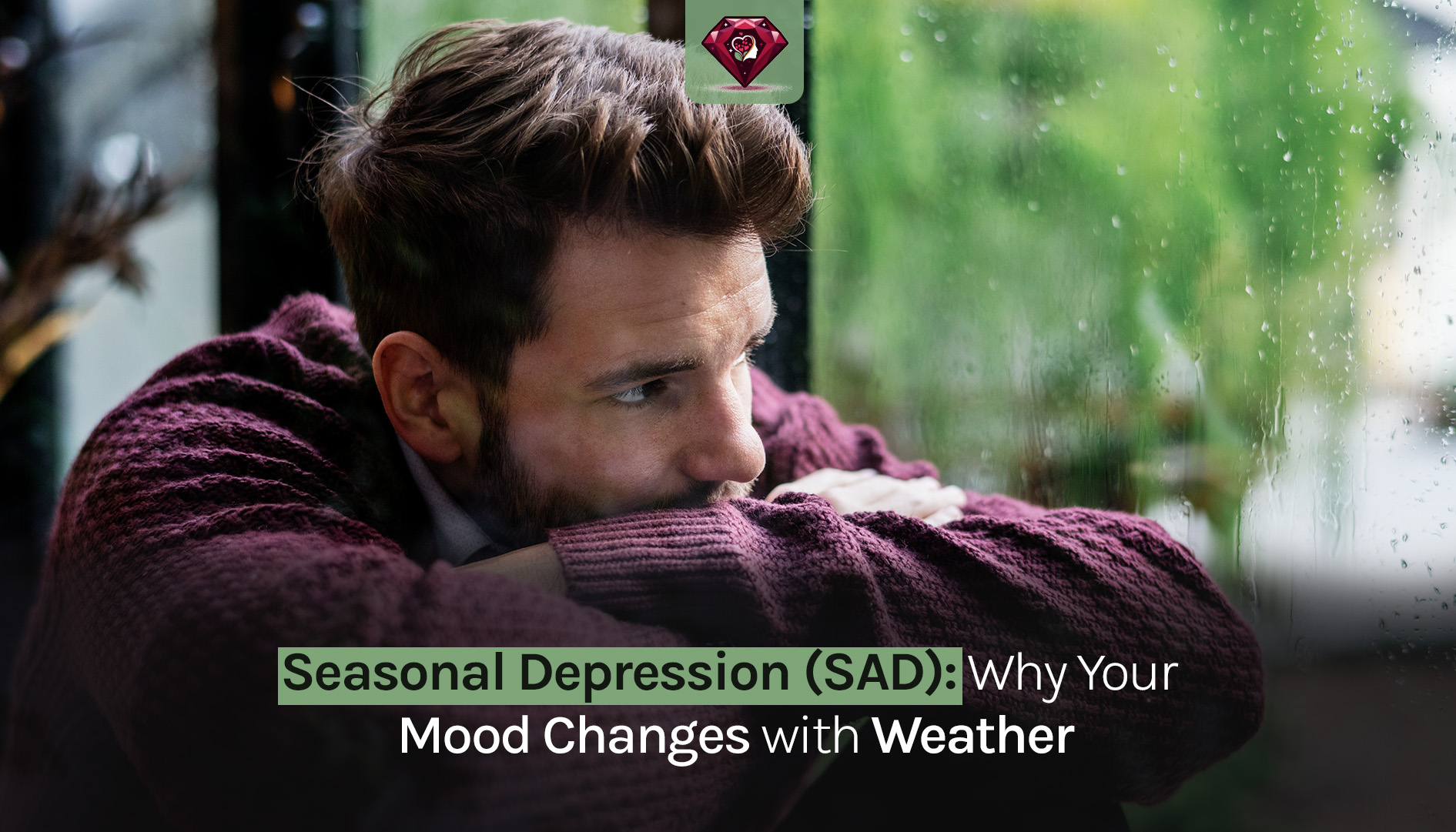
Seasonal Affective Disorder (SAD), also called the “winter blues,” is a kind of depression that happens when the seasons change. It usually starts in the fall and lasts through the winter. For a lot of people, SAD is more than just feeling sad; it can make it hard to sleep, eat, and do everyday things. Below, we talk about what causes SAD, how it is linked to weather and light, and what you can do to improve your mood and health.
What Is Seasonal Affective Disorder (SAD)?
Seasonal Affective Disorder (SAD) is a kind of depression that happens when the seasons change. SAD symptoms usually start in late fall and last through the winter, when the days are shorter. But there is a less common type of SAD called “summer depression” that can happen in the hotter months of summer.
Difference Between SAD and Major Depression
Major depression can happen at any time, but Seasonal Affective Disorder (SAD) follows a pattern that happens at certain times of the year. SAD symptoms always start and end at the same time each year, and they are usually linked to reduced sunlight. Both SAD and depression can cause emotional problems like feeling down and not wanting to do anything, but the main difference is when SAD happens and how it relates to light exposure.
Who Is Most at Risk?
Several things can make you more likely to get Seasonal Affective Disorder (SAD). You might be more likely to get it if you:
- Geographic Location: Live in higher latitudes where winter nights are long, and there isn’t much sunlight.
- Gender: Women are more likely than men to be diagnosed with SAD.
- Personal or Family Medical History: You or someone in your family has had depression or another mood disorder.
- Lifestyle Factors: If you spend a lot of time indoors or work night shifts, you won’t get as much natural light.
Why Does Weather Affect Your Mood?
Reduced sunlight lowers serotonin levels
Sunlight is essential for controlling serotonin, a neurotransmitter that keeps mood stable. During the darker months, when there is less natural light, serotonin activity can go down. This can cause symptoms like sadness, low energy, and a lack of motivation.
High Melatonin Levels Disrupt Sleep Cycles
The body produces more melatonin, the hormone that regulates sleep, during shorter days. This rise can make you feel worn out and sleepy during the day and sleep too much, especially if you have Seasonal Affective Disorder (SAD).
Vitamin D Deficiency Impacts Mental Health
In the winter, when people are less likely to get enough sunlight, their bodies don’t make enough vitamin D. Low levels of vitamin D have been linked to depression and low mood, which makes seasonal symptoms worse.
Cold Weather Increases Social Withdrawal
Harsh weather conditions can make it difficult to exercise outside and make people less likely to interact with others. Being inactive and alone can be bad for your mental health and break up healthy routines.
Recognizing Seasonal Affective Disorder (SAD) Symptoms
Recognizing the early signs of Seasonal Affective Disorder (SAD) is essential for effective management. There are three main types of symptoms that people with this type of seasonal depression usually have:
Emotional Symptoms
- Persistent low mood, sadness, or feelings of hopelessness
- Loss of interest in hobbies and activities once enjoyed
- Increased irritability, agitation, or sensitivity
Physical Symptoms
- Sleeping too much (hypersomnia) and having trouble waking up
- Always feeling tired, heavy, or lethargic
- Craving carbs a lot and gaining weight as a result
Behavioral Symptoms
- Pulling away from friends and family and becoming socially isolated
- Trouble focusing or “brain fog”
- Less desire to do everyday tasks
If these signs of SAD make it hard for you to do your daily tasks or last longer than two weeks, please see a doctor for a professional diagnosis.
Effective Treatment Options for Seasonal Depression
Looking for ways to manage seasonal depression (SAD)? Here are some evidence-based treatments that can improve your mood during the darker months.
Light Therapy for SAD
A lightbox that gives off 10,000 lux of bright light for 20 to 30 minutes every morning can help with seasonal depression. This therapy can help reset your body’s internal clock, or circadian rhythm, which can make you feel better.
Cognitive Behavioral Therapy (CBT)
Cognitive Behavioral Therapy specifically adapted for SAD (CBT-SAD) is a type of therapy that helps you find and change the negative thoughts and actions that go along with the condition.
Antidepressant Medications
Antidepressant drugs can help people with moderate to severe seasonal depression. A doctor can look at your symptoms and decide if medication is the best option for you.
Vitamin D Supplements
Research indicates a potential link between low vitamin D levels and winter depression. If a blood test indicates that you are deficient, taking vitamin D supplements under a doctor’s supervision may help your symptoms get better, often in addition to other treatments.
Before starting any new treatment, such as medications or supplements, it’s important to talk to a doctor to make sure it’s safe and right for you.
How Ruby Reflections Mental Health Helps
We understand that seasonal depression can be hard to deal with, especially when it comes back every year. Our goal is to give you personalized, helpful care that makes you feel better and helps you get back on track.
This is how we help people with SAD:
Individualized Evaluations
We take the time to learn about your specific symptoms, triggers, and way of life so that we can make a care plan just for you.
Therapy Based on Evidence
Our licensed therapists use CBT and other proven methods to help you deal with negative thoughts and get better at coping.
Advice on healthy routines and light therapy
We can help you learn how to safely use light therapy and make daily habits that make you feel better, like getting better sleep, getting more sunlight, and eating better.
Final Words
Seasonal Affective Disorder (SAD), also called seasonal depression, is a common condition that can be treated. If your mood changes with the seasons in a predictable way, combining daily strategies with professional help can make a big difference in your health. You can control its effects by keeping track of your symptoms, using light therapy, and sticking to a schedule. At Ruby Reflections Mental Health, we are ready to help you find your way, give you personalized support, and help you get back on track and have better days.
FAQs
Is seasonal depression the same as the “winter blues”?
Not exactly. Winter blues involve mild tiredness or low motivation. SAD is more intense and affects daily functioning, sleep, appetite, and mood.
Can SAD go away on its own?
When the seasons change, symptoms often get better, but SAD that isn’t treated tends to come back every year, sometimes with more severe symptoms.



: Why Your Mood Changes with Weather)