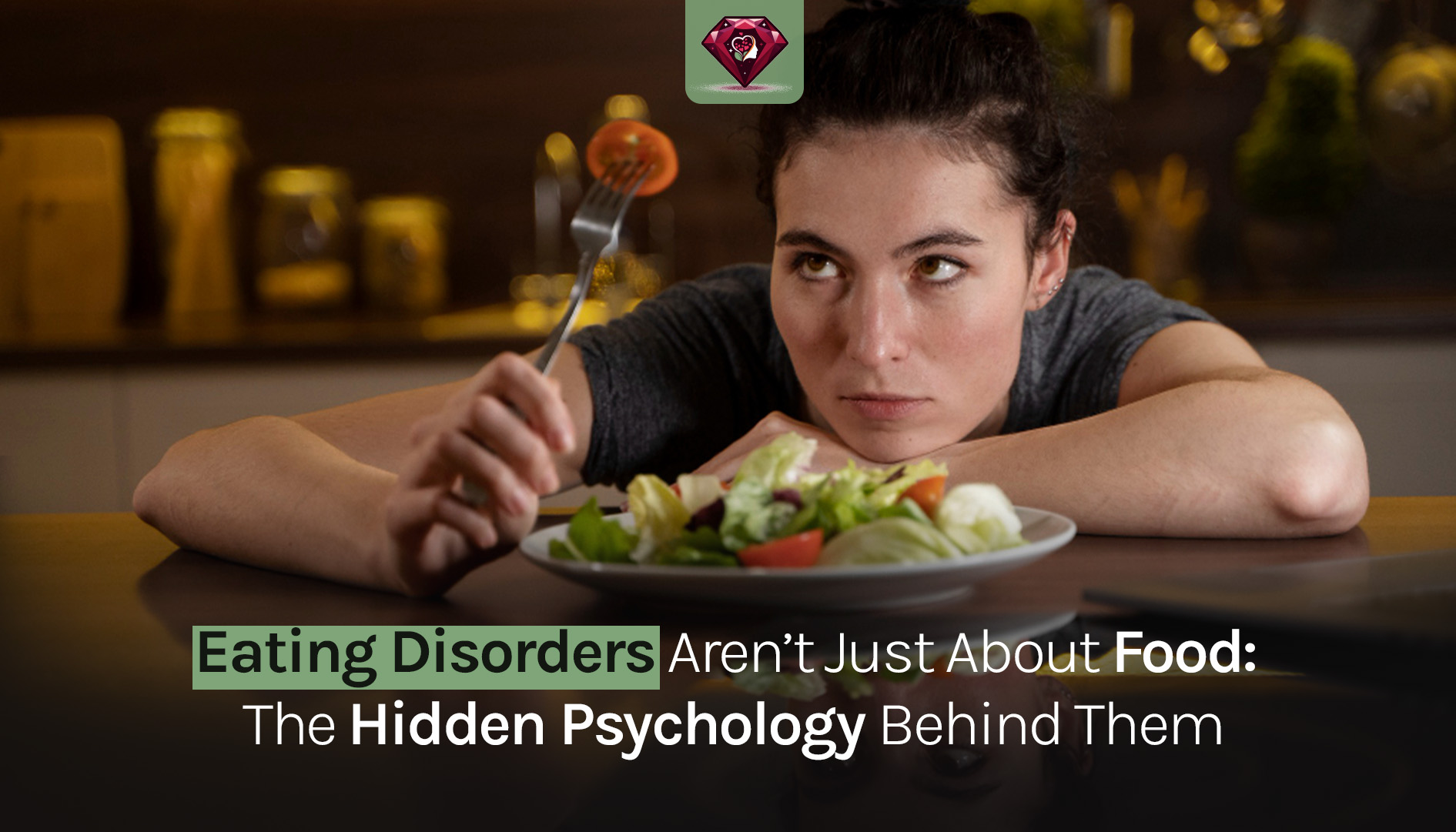
Eating disorders are severe mental health conditions that have experienced a worldwide rise in prevalence, impacting millions globally. These disorders are much more complicated than just worrying about dieting or how you look. They are deeply rooted in psychological factors like trauma, intense emotions, and a distorted sense of self, and people often use food behaviors to cope with emotional pain.
This blog article talks about the hidden psychology behind eating disorders, clarifies some common misconceptions, and lists the main risk factors, signs, and treatment options to help you approach recovery and support with kindness and understanding.
What Are Eating Disorders? A Quick Overview
Eating disorders are serious mental health problems that involve unhealthy habits related to food, weight, and how you look. They are often thought of as lifestyle choices, but they come from deep psychological pain and require professional help.
Anyone, no matter their age, gender, or background, can have one of these disorders. Up to 9% of the world’s population is affected.
- Anorexia Nervosa: Characterized by an extreme fear of weight gain and severe restriction of food intake, often leading to dangerously low body weight.
- Bulimia Nervosa: This condition is characterized by a cycle of eating a lot of food and then doing things to get rid of it, like throwing up, working out too much, or taking laxatives.
- Binge-Eating Disorder: This is when someone eats a lot of food quickly and feels out of control, but they don’t do anything to get rid of it afterward.
- OSFED (Other Specific Feeding or Eating Disorder): A category for very serious conditions that cause a lot of distress but don’t fit the strict diagnostic criteria for anorexia or bulimia.
The Path to Recovery: Eating habits are a sign of the problem, but the real problems are in the mind. For treatment to work and for long-term recovery, it is very important to deal with these underlying emotional problems.
Debunking the Myth: Why Eating Disorders Aren’t Just About Food
People often think that eating disorders are caused by vanity, willpower, or wanting to be thin. Experts recognize that eating disorders are not just lifestyle choices; they are complicated mental health problems.
Food Behaviors: A Symptom, Not the Cause
Food-related behaviors frequently function as coping strategies for underlying emotional distress rather than being the primary cause.
- Restriction: It might make you feel like you have more control when things are out of control.
- Bingeing: It can help you feel better for a short time if you’re stressed, sad, or emotionally numb.
Ultimately, these problems are not usually “about the food.” People use food to heal deeper psychological wounds instead.
How Diet Culture and Social Media Impact Body Image
Social media and diet culture often show unrealistic, edited images of bodies. This can make people think eating disorders are just about looks or wanting to be thin, instead of serious mental health conditions.
- Comparison culture: Always being around “perfect” standards makes people unhappy with their bodies and puts them at risk.
- Food labeling: Categorizing food into groups like “clean” or “bad” can hurt your self-esteem and lead to bad habits.
- Digital distortion: AI filters and false information on the internet ignore the fact that bodies come in all shapes and sizes and promote narrow definitions of health.
Society’s emphasis on appearance neglects the psychological complexities of these conditions. Eating disorders are fundamentally rooted in emotions, self-esteem, and survival strategies.
The Hidden Psychology Behind Eating Disorders
At their core, eating disorders are complex psychological conditions manifested through food. To treat someone with compassion, you need to know what caused their problems, which could be anything from their personality to their biology.
Emotional and Psychological Triggers
- Emotional problems, such as anxiety, depression, and low self-esteem, often cause disordered eating. Some of the most important psychological drivers are:
- Anxiety: Keeping track of what you eat can help you deal with uncertainty.
- Depression: People may eat to numb their painful feelings.
- Perfectionism: Having high standards and not being able to change your mind (cognitive inflexibility) can make you feel like your worth is tied to an “ideal” body image.
- Emotional Dysregulation: People may use avoidance motivation to avoid situations or feelings that make them uncomfortable.
These actions are not signs of weakness; they are how people deal with too much internal pressure.
Trauma and Past Experiences
Trauma, especially adverse childhood experiences (ACEs) like emotional neglect or abuse, constitutes a major risk factor for numerous individuals. Disordered eating functions as a means of self-soothing or re-establishing a sense of agency after feeling powerless. Studies demonstrate a strong correlation between historical trauma and the onset of eating disorders.
Genetics and Brain Chemistry
Biology is very important in determining how vulnerable someone is. Family history and imbalances in neurotransmitters such as serotonin and dopamine can significantly affect mood and appetite.
Recent studies indicate that eating disorders, such as anorexia, possess both genetic and environmental factors. This includes biological sensitivities, like being overly sensitive to changes in body sensations, which can make physiological inputs stronger. Understanding these genetic and biological roots helps move the conversation away from blame and toward good care.
Recognizing the Signs: Beyond Physical Symptoms
Spotting an eating disorder early can make a big difference, but the signs aren’t always obvious.
Emotional and Behavioral Indicators
Look for:
- Constantly thinking about food, weight, or body shape.
- Mood changes, being irritable, or pulling away from social activities, especially meals.
- Eating in secret, like hiding food or eating alone.
- Food rituals (like cutting food into small pieces), working out too much, checking your body too often (like looking in the mirror or comparing yourself to others), or saying negative things about your body.
Physical Clues Tied to Psychology
Changes in the body, like extreme weight loss or gain, fatigue, and hair loss, are often caused by mental stress and not getting enough food. But a lot of people with eating disorders are at or above their normal weight; appearance isn’t the only way to tell if someone has one.
If you see these signs, get help from a professional. The first step to getting better is to reach out.
Risk Factors and Who Is Affected
People of all ages, genders, and backgrounds can have eating disorders. Genetics and biology are important, but there are a few key risk factors that increase vulnerability.
Key factors include:
- Age: They usually show up in teens or young adults, but they can start earlier or later.
- Gender: Women are more likely to be diagnosed, but the number of men and non-binary people being diagnosed is going up.
- Environmental: Family dynamics, peer pressure, high-stress jobs (like modeling or athletics), or a culture that values being thin.
- Psychological: Conditions that happen at the same time, like OCD, PTSD, ADHD, or body dissatisfaction, make the risks higher because they can affect how people eat.
Genetics, trauma, and other conditions that happen at the same time, like anxiety, all increase the risk, but anyone can be at risk. These conditions are complicated human experiences that can affect anyone, not just people who fit certain stereotypes.
Eating Disorder Treatment and Recovery
It is possible to get better. Long-term studies indicate that 46-67% of patients attain complete remission with appropriate support.
Evidence-Based Therapies
Effective treatment targets psychological roots through:
- Cognitive Behavioral Therapy (CBT): Challenges false beliefs about food and body image.
- Dialectical Behavior Therapy (DBT): Helps people learn how to control their emotions.
- Family-Based Therapy (FBT): Involves family members in the healing process.
Holistic Support Strategies
Comprehensive care often combines therapy with:
- Nutritional Counseling: To rebuild healthy eating habits.
- Medical Support: Medicine for anxiety or depression that happens at the same time.
- Lifestyle Changes: Mindfulness and support groups for long-term well-being.
- Inclusive Care: Providers who show unconditional positive regard and work to eliminate bias.
Treating co-occurring conditions like OCD or ADHD is essential. Early intervention significantly boosts recovery outcomes.
How to Support Someone with an Eating Disorder
Supporting a loved one takes patience and empathy.
Dos:
- Listen without judgment.
- Encourage professional help gently.
- Offer practical support, like attending appointments.
Don’ts:
- Comment on their appearance or food choices.
- Force eating or dismiss their feelings.
You can get help from resources like the National Eating Disorders Association (NEDA) helpline. Being an advocate by getting to know someone and asking them open-ended questions about their eating habits and body image can make a big difference.
Early Prevention: Building Healthy Mindsets
Prevention begins by creating positive, supportive environments:
- Encourage families and schools to be positive about their bodies and accept themselves.
- Teach people how to deal with stress in healthy ways instead of focusing on their diets.
- Curate your social media feeds to cut down on negative content and encourage critical thinking.
- Normalize body diversity to combat misinformation about nutrition.
These small steps help you become more resilient in the long run.
A Message of Hope: Moving Toward Recovery
By understanding the hidden roots of eating disorders in emotions, trauma, self-perception, and factors like perfectionism, genetics, and cultural pressures, we can move beyond myths toward empathy and effective support.
The first step toward effective treatment is to understand where these feelings come from. You can get better. There is professional help available if you or someone you care about needs it. Reach out today to begin your path to recovery. You are not alone.
FAQs
What is the psychology behind eating disorders?
They’re driven by emotional coping, control needs, trauma, distorted self-worth, perfectionism, and biological sensitivities, not just food.
Are eating disorders really not about food?
Food is a symptom; the core is psychological pain and deeper issues.
How can I tell if someone has an eating disorder?
Watch for obsessive thoughts, mood changes, secretive eating, food rituals, or withdrawal beyond physical signs.