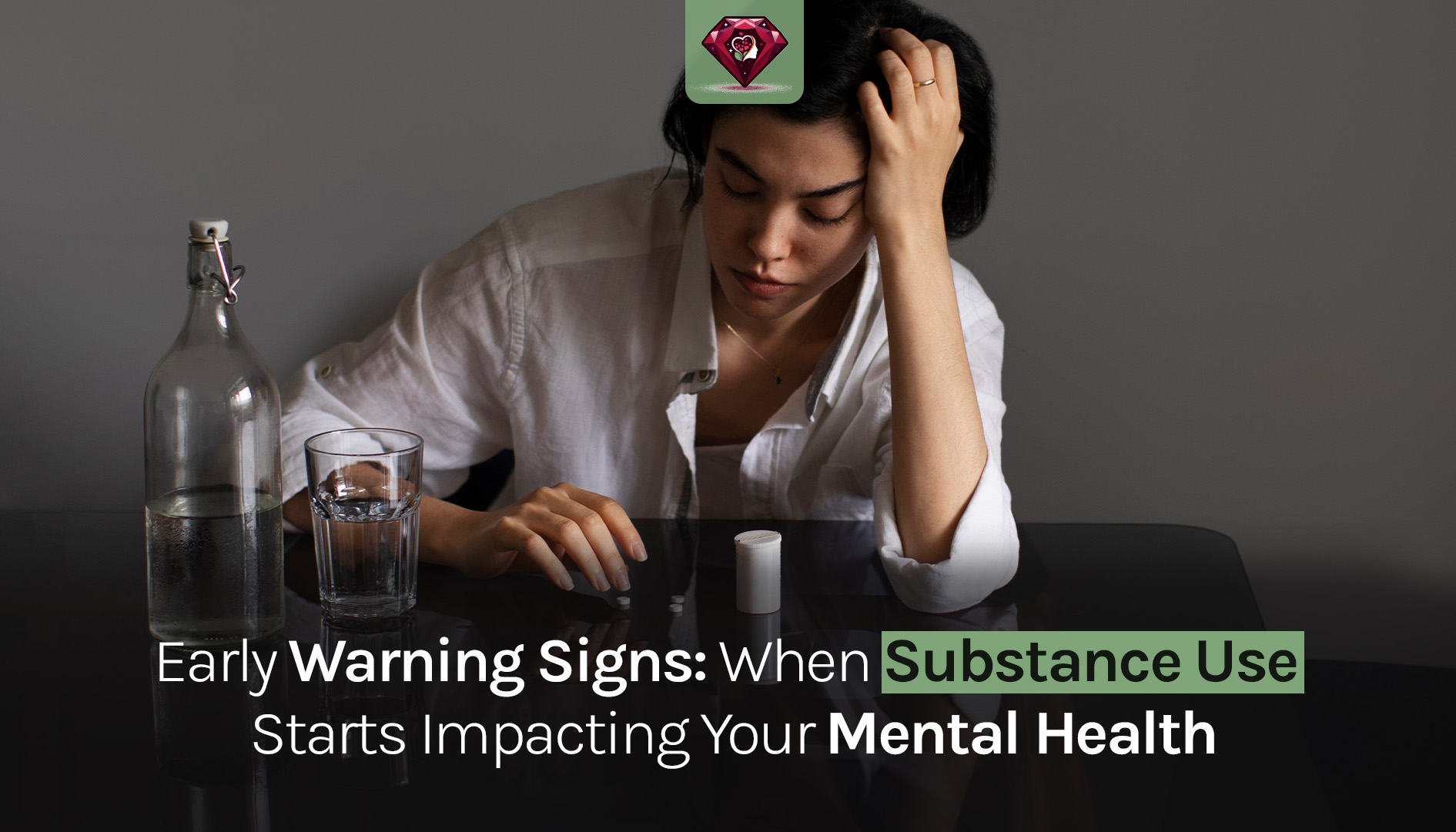
It usually starts slowly, like having a drink to relax after a long day or a weekend habit to deal with stress. Life appears regular from the outside. You do your work and meet your deadlines. But there may be minor changes in your mental health that are starting to appear.
A lot of people drink or use substances to deal with stress or being alone. But it might be hard to tell the difference between “taking the edge off” and damaging your mental health. This post discusses the first symptoms that substances are having an impact on your life. By knowing how to detect these warning signals, you can take charge before behaviors get tougher to quit.
Understanding the Hidden Connection: Substance Use and Mental Health
It’s can be hard to see how mental health and substance use are connected. They often have an effect on each other in both ways. To help individuals stay healthy for a long time and stop cycles that affect millions of people around the world, it’s crucial to grasp this link.
What Is the Connection Between Substance Use and Mental Health?
It’s not easy to see how mental health and substance use are connected. They often have an effect on each other in both ways. To help individuals stay healthy for a long time and stop cycles that affect millions of people around the world, it’s crucial to grasp this link.
Anything that changes how your body or brain feels can affect your mental health. The DSM-5 says that these are the main types of substances that are most often linked to mental health problems and substance use disorders:
- Alcohol: The drug that people abuse the most. While it can help you relax, using it too often can make you more depressed and irritable.
- Cannabis (marijuana): People often use it to relax, but using it a lot or regularly can make you more paranoid, less motivated, and confused.
- Opioids: These are drugs that include heroin, oxycodone, and fentanyl. Misuse can make you feel very low emotionally, especially when you stop using.
- Stimulants: This group includes cocaine, methamphetamine, and prescription medications like Adderall. These can make you more anxious and restless long after the high wears off.
- Sedatives and Anti-Anxiety Drugs: These include sleep aids and benzodiazepines like Xanax and Valium. Using these too much can make your anxiety come back.
- Tobacco/Nicotine: Smoking and vaping are strongly linked to changes in mood and anxiety.
- Other Drugs: This group includes hallucinogens (like LSD), inhalants, caffeine, and man-made drugs.
It’s not just the drugs itself; it’s also why you use it. Even legal medicines can hurt your mental health if they become your main way of dealing with stress.
Global Trends: The Landscape of Drug Use
A lot of other distressing things are going on in the world right now, in addition to these problems. The World Drug Report 2025 from the UNODC claims that more people are using drugs alone because they don’t know what will happen with the economy, and due to the excessive popularity of social media. This shows that people are still suffering with the repercussions of being alone after the pandemic, not having a job, and the restrictions of modern living.}
The other big factor is the use of social media. A lot of websites make “casual” drug use seem normal and okay. Teens who see and are affected by this kind of content may be especially affected by it.
The Tipping Point: How Casual Substance Use Becomes a Mental Health Concern
It might be hard to spot the early indicators of substance dependence because not everyone goes through the same things. But it’s important to know how casual use can lead to addiction to preserve your mental health.
This is a simple three-step timeline to assist you in finding the “tipping point”:
Phase 1: Casual Coping
At this point, people only take drugs or alcohol to relax or have fun with friends. Most of the time, it has little to no impact on your daily life or mood.
Phase 2: The Tipping Point (Subtle Interference)
This is the important middle phase when mental health often gets worse. You might feel more anxious, moody, or irritable. It’s easy to write off these indicators as work stress or being tired, but this is the ideal time to get help.
Phase 3: Emerging Dependence
At this point, consuming drugs is the main way to deal with emotional pain. The symptoms get worse, and it gets harder to stop.
What Accelerates the Shift?
Several things can make the shift from casual use to dependency happen faster:
- Environmental Triggers: The pressures of modern living, including working from home, can make nighttime “wind-down” behaviors into strict rituals.
- Biological Factors: Genetic predispositions can render certain individuals more vulnerable.
- Lifestyle: Things like too much screen time that keeps you from sleeping can make you less resilient.
Busting the “Stress Relief” Myth
Many people think that using drugs is just a safe method to deal with stress. Even moderate use can change the chemistry of the brain in just a few weeks, even if it doesn’t seem like it at first. Using it a lot might change the way dopamine works in the brain, making natural pleasures feel less exciting and making you want a rapid fix more.
Knowing this timeline helps move the focus from blame to taking care of your mental health.
Early Signs of Addiction: Behavioral Red Flags to Watch
Behavior usually changes even before physical changes appear. Being able to notice these small changes in daily life is very important for recognizing early indicators of addiction or drug abuse. Watch out for these three big signs to identify change in behavior:
More Secrecy and Being Alone
Being alone isn’t only about being in a room by yourself. It often shows up as avoiding or withdrawing from social situations. You might see someone avoiding certain friends or family members, downplaying how much they use, or getting very defensive when you press them about their habits.
Changes in Routine That Happen All of a Sudden
Changing your regular habits is a classic sign of drug misuse. Look out for:
- Loss of Interest: Giving up on activities or hobbies that used to make you happy.
- Change in Priorities: Choosing activities related to drugs over family dinners or personal obligations.
- Dependence for Normalcy: Feeling that you have to consume a drug to relax or “feel normal” after work.
- Making Risking Choices
Taking risks doesn’t always mean doing something big or obvious. Mixing alcohol with prescription medications, using substances to deal with work stress, or always ignoring advised usage limits are all early warning signals. These activities are generally caused by mental exhaustion or burnout, not carelessness, which makes them easier to miss.
Early Warning Signs: Emotional and Cognitive Shifts
Mental health problems generally originate inside the person before they show up to others. If you think that using drugs or alcohol is hurting your health, look for these early indicators of emotional and mental problems.
Mood swings and being irritable
Changes in how you handle your emotions are one of the most typical indications of substance use. You might have abrupt mood changes, going from very angry to emotionally “flat” or numb in a matter of minutes. A lot of the time, the emotional lows persist longer than they should, which makes regular stress seem impossible to handle.
Self-Medication Patterns
Are you utilizing drugs or alcohol to deal with bad feelings? Using drugs or alcohol to get away from boredom, anxiety, grief, or loneliness is a big warning sign. This behavior may give you brief relief, but in the long run, it makes your natural emotional strength weaker.
Cognitive Changes and Mental Fog
Changes in how your brain works can be little but important, especially in high-functioning adults or teens. Some important signs are:
- Memory Lapses: Forgetting things and making bad choices that are linked to problems with dopamine.
- Paranoia and Overthinking: Feeling more anxious or suspicious in everyday situations, which is sometimes made worse by the need to compare yourself to others on social media.
These signs talk softly before they shout, giving people a chance to seek support.
3 Physical Signs of Mental Strain You Shouldn’t Ignore: Body-Mind Overlaps
Your body and mind are very closely linked. When you’re psychologically tired, your body typically sends you warning signs before you even know you’re stressed. Here are three frequent physical signs that your mental health is suffering.
Problems with sleep and energy
Mental tiredness doesn’t necessarily feel like not being able to sleep. It can show up as broken sleep, waking up feeling tired, or needing a lot of caffeine or sleep aids to get through the day.
Changes in appetite
Substances can cause your appetite and weight to change. It might mess with your digestive system. You can suddenly lose your appetite or start eating more because of stress. This might cause your weight to shift and your energy levels to be inconsistent.
Unexplained Pain and Aches
It could be psychosomatic if you have headaches, muscle tension, or digestive problems that don’t have a clear medical reason. When you have a lot of mental stress, your body may respond with these physical problems.
Don’t ignore the signs. If you observe these signs, it could be time to deal with the mental stress that is hurting your health.
Building Resilience
But the good news is that not everything is bad. Protective factors are a big part of prevention. Having a strong family bond and being honest about mental health can help loved ones get through these hard times by turning weakness into strength.
Finding Your Own Tipping Point: Tools for Self-Reflection
Are you ready to check in? Try this 10-question self-assessment. Answer yes or no, then give a score from 0 to 3 for low concern, 4 to 7 for moderate concern, and 8 to 10 for high. This will guide you to have a dialogue with a specialist.
- Do you take substances more often when you’re stressed out?
- Does your mood change after you use?
- Are you putting off things you like to do in favor of things that have to do with substances?
- Do you keep your use a secret from the people you care about?
- Are you sleeping or feeling more tired than usual?
- Do you worry too much or feel worried even in situations when the stakes are low?
- Has your appetite changed for no reason?
- Are you taking more risks, like mixing medications?
- Do you feel bad about your use?
- Is it having a small effect on your job, school, or relationships?
Journaling for Awareness
Keep a record of when you take drugs and how you feel before and after. It usually takes a week for patterns to show up.
Thoughtfully Including Family
When to ask your family for help: Start with empathy, like “I’ve seen that you’ve been stressed.” Do you want to talk? Don’t fight; instead, help.
Taking Action: Pathways to Support and Prevention
Things to Do Right Away
- Write down your emotional patterns and what makes you feel that way.
- Find better ways to deal with stress, like doing things regularly, being active, or being aware of your thoughts.
Family Involvement
Give spouses and parents tips on how to talk to each other without feeling bad about it.
Getting Help from Professionals
If you see three or more signs, you should talk to a therapist or join a support group. We offer mental health treatment that is customized for each person. Many people can find a long-lasting balance by taking the right steps. As care becomes more integrative, things are getting better. Being able to see things early on is a strength, not a weakness.
Use the tools above to help you think and get help. It’s easier to handle problems healthily, build stronger relationships, and stay mentally healthy for a long time if you know about them early on.
FAQs
What’s the difference between casual substance use and a mental health concern?
The difference lies in impact. It becomes a problem when it starts to change your mood, routines, or relationships without you knowing it.
How can families spot these signs in loved ones without invading privacy?
Be gentle and pay attention to any changes in their energy or behavior. Talk to them with kindness.
Where can I find immediate mental care resources?
Try calling SAMHSA’s helpline or a local crisis line.