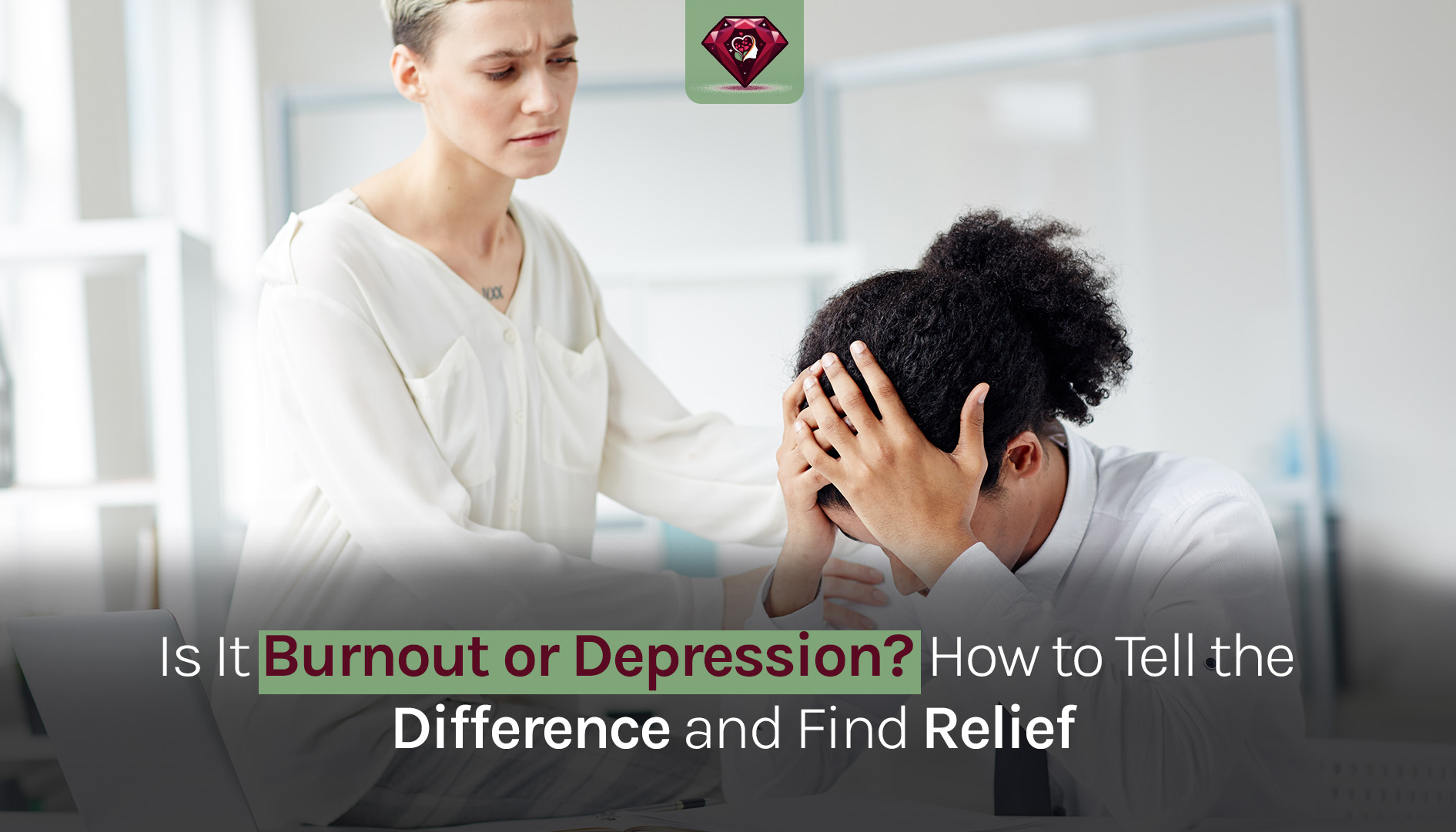
Do you always feel tired, unmotivated, and emotionally drained? You’re not the only one. In today’s fast-paced world, a lot of us confuse burning out with depression. In reality, these two things are not the same and need different kinds of help.
Finding out what makes you tired is the first step to feeling better. This post will explain the differences between burnout and depression. This will help you spot the signs of burnout and figure out how to get help if you or someone you know might be depressed.
Why Burnout and Depression Are Often Confused
From the outside, burnout and depression look very similar. Both of these things make you tired, unmotivated, and moody. Because of this, a lot of people struggle to express what’s wrong exactly and often blame themselves for not being able to “handle” it well enough.
Overlapping Emotional and Physical Symptoms
At first, the physical and emotional signs of both conditions are very similar, which makes it hard to tell where one ends and the other begins. Some of the most important signs that link burnout and depression are:
- Chronic fatigue: Always being tired, even after getting enough sleep.
- Loss of motivation: You don’t want to do the things you used to love doing every day.
- Brain fog: Trouble remembering things, staying focused, or concentrating.
- Emotional numbness: feeling cut off, withdrawn, or just empty.
Shared Triggers in Daily Life
Just like overlapping symptoms, the causes often look similar too. Burnout and depression can both happen in high-pressure environments.
- Constant stress: Stress that lasts for a long time without giving you time to recover.
- A lot of responsibility: Jobs with a lot of risk, like caregiving or management.
- Poor boundaries: Not being able to separate work and personal life, which cuts into personal time.
- Not getting enough help: Not getting enough sleep, emotional support, or help from other people.
People often think the solution is the same because the things that set it off are so similar. But the first step to getting better is to understand their difference to deal with them in a proper way.
What Is Burnout?
Understanding Burnout as a Stress-Related Condition
Burnout isn’t just a bad day; it’s when you’ve been under a lot of emotional, mental, or physical stress for a long time and are completely worn out. It usually happens when you have too much to do and can’t get enough rest.
Burnout isn’t a medical condition, but it can affect your physical and mental health, which can have a big effect on your quality of life. It usually happens because of:
- Too much work: High-pressure jobs with few breaks.
- Caregiver fatigue: The stress of caring for others while not taking care of yourself.
- Lack of control: being under constant stress without being able to do anything about it.
To put it simply, burnout is when you run out of all your strength, energy, and emotional reserves.
Common Signs of Burnout
Burnout doesn’t happen all at once; it builds up over time. Here are the most important 5 signs to watch for:
- Chronic Exhaustion: Feeling tired all the time, even after getting enough sleep.
- Emotional Detachment: Being critical, cynical, or distant from your job or family.
- Less performance: You can’t concentrate, or you don’t think your work is important.
- Irritability: Getting mad at coworkers, friends, or family very quickly.
- Physical signs: Headaches, stomach problems, or changes in how you sleep are all physical signs.
People who are burned out still care about their duties, but they don’t have the energy to do them. This is not the same as depression, which makes you feel like you have no hope for life in general.
Who Is at Risk?
Anyone can get burned out, but some groups are more likely to do so because of their jobs or personality traits:
- Parents and caregivers: There isn’t much time for self-care because they are always taking care of someone else.
- Helping Professionals: Doctors, nurses, and social workers often have to deal with a lot of emotional stress.
- Perfectionists: People who set goals that are impossible to reach and are very successful are more likely to burn out.
- People who don’t have support: It’s a lot harder to handle stress when you’re by yourself.
Don’t forget that being burned out doesn’t mean you failed. It means that your body and mind are telling you that you need to make some changes in your life.
What Is Depression?
Depression as a Mental Health Issue in the Clinic
Depression is a mood disorder that changes how you feel, think, and do things every day in a big way. It’s normal to feel sad sometimes, but depression is different. It can affect you for a long time, even when things are going well.
Burnout may occur due to work and other similar factors. In contrast, depression may be brought about by emotional patterns that do not change, no matter the place one changes to or the adjustment in activities.
Diagnosis of depression requires a professional mental health evaluation since it is based on specific criteria and a thorough examination of a person’s emotional well-being. It is not a fleeting mood but a critical mental health issue that needs correction.
Signs you may be depressed
- Sustained Low Mood: A sadness or a heavy feeling in your heart that doesn’t go away.
- Not caring about things anymore: Having no interest in activities and hobbies as one used to.
- Body changes: Significant changes in sleep, appetite, or fatigue that persist.
- Negative self-talk: Thoughts that make you feel bad about yourself, guilty, or like you can’t do anything.
How Depression Can Affect Everyone in the Family
When someone is depressed, it usually affects not only that person but also their whole family. This could make your family members notice that you are more detached or sensitive, which could lead to the following:
- Problems with communication: You won’t be able to connect with others.
- Routines that are messed up: chores and caregiving duties could change or get worse every day.
- Stress in Relationships: The changes that have taken place can put a strain on the relationship between the partners and the family.
Burnout vs. Depression: How to Spot the Difference
Many people mix up burnout and depression. Both of these conditions can make you feel tired, disconnected, and unable to do your best work. But they are different experiences that need different ways to be managed and healed. The first step to feeling better is to understand the differences between the two.
Here is a list of the main differences between burnout and depression, how they are related, and how they affect your daily life. While the symptoms often overlap, the root causes and emotional textures differ significantly.
1. Root Cause and Duration
Burnout happens in certain situations. It is usually linked to a specific stressor, like a job with a lot of pressure, schoolwork, or taking care of someone for a long time. Symptoms usually start to get better when you leave that situation or lighten the load.
Depression is common. It tends to change everything about life, no matter what. Even when outside pressures are lifted, or you move to a new place, symptoms of depression often stay the same.
2. The Emotional Experience
Burnout is often caused by too much stress, too many emotions, and being too tired. You might feel angry or upset.
Too little emotional energy is a common sign of depression. It often makes people feel empty, hopeless, or like they don’t have any feelings (anhedonia). It changes how you feel about yourself and how you see the world around you, not just how you react to tasks.
3. Response to Rest
Resting usually helps with burnout. Taking a vacation, a weekend off, or cutting back on hours usually makes your mood and energy noticeably better.
A nap or a vacation won’t easily get rid of depression. It is a mental health condition, so it usually needs structured treatment, like therapy or medication, to get better. Rest by itself is not usually enough.
Can Burnout Turn Into Depression?
Burnout and depression are not the same thing, but if you don’t take care of burnout, it can make you depressed. Stress that doesn’t go away over time makes you less emotionally strong, keeps you from sleeping well, and changes how your brain deals with stress. Over time, the situational exhaustion of burnout can turn into a more serious type of depression.
It’s important to be able to see the signs early on to keep yourself safe. It lets you get help before your symptoms get worse.
How Burnout and Depression Affect Daily Life and Well-Being
It’s hard to tell the difference between these two conditions because they both make life harder in the same ways.
- Sleep and Energy: It’s hard to get enough sleep when you have either of these conditions. You might have trouble falling asleep, wake up a lot, or sleep too much and never feel rested. This makes you more and more tired, both physically and mentally.
- Cognitive Function: Both have trouble with “brain fog.” You might find it hard to focus on things that used to be easy, make decisions, or think clearly.
- Relationships: If you have either of these conditions, you may start to pull away from people you care about. You may want to connect with others, but you may not have the emotional space to do so. This could cause misunderstandings and make you feel alone.
Strategies for Managing Burnout & Depression
When you’re running on empty, the first thing you need to do is figure out the difference between burnout and depression. The next step, and the most important one, is to know how to get better. These useful tips can help you get back on track after being burned out or find ways to deal with depression.
Actionable Relief for Burnout
If you are feeling burned out, your main goal should be to get your energy back.
Things You Should Do Right Away
- Put rest first: Set aside time in your schedule that you can’t change.
- Set Limits: Get used to saying “no” to extra work that makes you tired.
- Delegate: Whenever you can, let someone else do your work or chores.
Long-Term Resilience
- Mindfulness: Try quick breathing exercises like “box breathing,” which involves breathing in for four counts, holding for four, and breathing out for four. This can help calm your nervous system.
- Changes to your way of life: Make sure you eat healthy meals, get some exercise (like walking), and get back into hobbies that make you happy.
Treatment Pathways for Depression
When someone is depressed, they often need a more clinical approach, with professional help being the most important thing.
Help From Experts
- Therapy: Cognitive Behavioral Therapy (CBT) is a great way to change how you think about things.
- Medical Intervention: Talk to a professional to see if taking medicine is a good way to balance the chemicals in your brain.
Holistic & Community Support
- Family Therapy: Getting better can be easier if you work on your relationships at home.
- Habits for helping yourself: You can feel better by doing simple things like keeping a gratitude journal (writing down three good things that happen to you every day) or spending time outside. Explore natural ways to stay active while dealing with depression.
- Community resources: Online forums and local support groups can help people feel better and get the help they need.
Remember that getting better takes time, not a race. When you see small changes, like making it through a tough day, it’s worth celebrating.
The Path to Recovery
You don’t have to make big, sudden changes to improve. It takes time. With the right help, recovery happens in small, steady steps. You can find relief if you’re feeling depressed or burned out.
If you’re feeling emotionally drained or stuck, you don’t have to deal with it on your own. Seeking professional help is the first step toward regaining control of your life and moving forward with confidence. At Ruby Reflections Mental Health, we offer comprehensive evaluations to help you understand what you’re feeling and guide appropriate care. Take the first step today and contact us!
FAQs
Are burnout and depression the same thing?
Burnout and depression have some of the same signs, but burnout is caused by stress and certain pressures, while depression is a clinical mood disorder that can persist across situations.
How do I know if I’m depressed or burned out?
Professionals look at how long symptoms last, what causes them, and how they happen. Rest usually helps with burnout, but depression usually needs more structured mental health care.