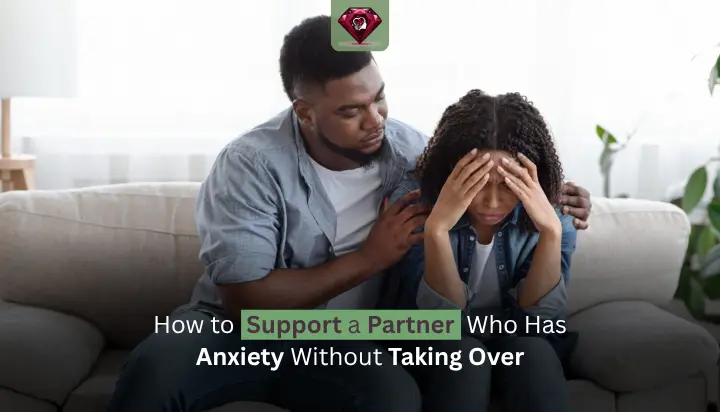
You love your partner, and you hate seeing them struggle with anxiety. When they are overwhelmed, your instinct is to jump in and provide solutions, take over tasks, or try to fix the situation as quickly as possible. The intention is out of care, but this can sometimes leave your partner feeling more helpless or unheard, and can quietly strain the relationship over time.
Supporting someone with anxiety is a fine line to tread. The aim is to be there and be supportive, not to take over their decisions, emotions, or responsibilities. When done well, support increases connection and makes both people feel more secure. This guide offers clear, compassionate ways to support your partner with anxiety, while respecting their autonomy and protecting the health of the relationship.
Why “Helping” Can Sometimes Become Taking Over
When someone you care about is anxious, it’s natural to want to make their suffering go away. Taking over tasks, making decisions for them, or constantly reassuring them can seem like the most caring response in the moment. But repeated takeovers can send them the wrong message: that they are not able to take care of themselves.
This can, over time:
- Lower their confidence in their own coping skills
- Make a dependency that’s uncomfortable for both of you
- Cause anger or emotional detachment
- Make the anxious partner feel more scrutinized than supported
True support creates space for your partner to practice their own skills, knowing they are not alone.
What Healthy Support Actually Looks Like
Healthy support is about presence, collaboration, respect, not control. It sounds and feels different from problem-solving mode.
Helpful support might typically include:
- Listening without instantly offering solutions
- Asking what would be most helpful right now
- Only providing practical support when it’s wanted
- Supporting their current coping mechanisms
- Staying calm when anxiety is on the rise
This approach says, “I’m here with you, and I believe you.”
Practical Ways to Support Without Taking Over
These are ways to stay connected while putting accountability where it belongs:
Ask first, then act
Simple questions like “Would it help if I sat with you?” or “Do you want ideas, or do you just need me to listen?” give your partner agency and decrease the odds of overstepping boundaries.
Offer presence more than solutions.
Sometimes the most powerful support is silent company, a hand to hold, a calm voice. Many with anxiety already know what they “should” do; they need protection more than counsel in the moment.
Help with structure, not control.
You can help create a quiet setting, help them with a shared job they have asked for help with, or gently remind them of tools they already find valuable without taking ownership of their emotions or decisions.
Validate the feeling, without escalating the fear.
Comments such as “This feels really hard right now,” or “I’m right here” validate their experience without engaging in catastrophic thinking.
Support minor measures they decide to take
Help them confront manageable challenges rather than eradicating all sources of difficulty for them.
Communication Habits That Protect the Relationship
Clear, polite communication eliminates misunderstandings on either side.
- Be honest and calm about your own limits when required
- Regular check-ins on what seems helpful vs. overwhelming in terms of support
- Don’t criticize their anxiety or coping strategy with language
- Acknowledge what they already do
When both partners feel heard, support is not one-way; it is a two-way street.
Taking Care of Yourself While Supporting Your Partner
Supporting someone who has anxiety can be emotionally exhausting. It is not selfish to look after yourself; it is essential if you are to be sustainable in your care.
Useful practices include:
- Keeping up with your own routines and friendships
- Knowing when you’re sliding into fixer mode and backing off softly
- Finding your own support: friends, therapy, quiet time
- Remembering that you can’t control or get rid of your partner’s anxiety
A regulated, grounded spouse is frequently better than an overworked partner trying to do it all.
When Professional Support Can Help the Relationship
If anxiety is producing ongoing tension, distance, or repeated patterns of takeover and withdrawal, professional guidance can be useful. Individual therapy for the person with anxiety builds confidence and coping skills. Couples-based support can help improve communication and help both partners develop healthier ways of relating to each other when anxious.
At Ruby Reflections Mental Health, we offer compassionate care for anxiety and the relational dynamics that so often accompany it. We offer safe telehealth and individualized therapy to help individuals and couples find more balanced and supportive ways of connecting.
Conclusion
Supporting a partner with anxiety without taking over is an act of respect as much as it is an act of love. It takes patience, clarity of communication, and a willingness to be present without trying to control the outcome.
Support offered in a way that preserves your partner’s sense of capability benefits both people. The relationship becomes a safe space, and the person with anxiety has more space to grow their own confidence, instead of a pressure cooker.
You don’t have to get this perfect. Over time, small changes in how you listen, ask, and stay grounded really add up. Feel free to pass this guide on to your partner or anyone else who may benefit from it. If you or your partner ever need more support, we are here at Ruby Reflections Mental Health.
Ready to strengthen support in your relationship? Schedule a secure telehealth evaluation today. We’re here to help with care and expertise.
FAQs
How can I help my partner with anxiety without making them feel incapable?
Ask them what they need, listen more than you solve, assist only if assistance is requested.
What should I avoid saying when my partner is anxious?
Don’t tell them to “just calm down” or minimize their feelings. More often, just validation and calm presence are more helpful.
Is it okay to set boundaries while supporting my partner?
Yes. Clear, kind boundaries protect both people and make support more sustainable.
When should a couple seek professional help for anxiety-related strain?
If anxiety is repeatedly creating distance, triggering conflict, or leading to controlling or withdrawal behaviors, it may be helpful to seek professional help.