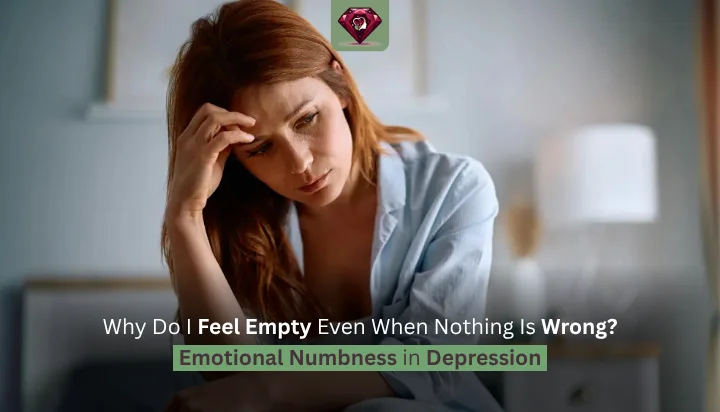
You wake up, go about your day, smile at your husband or kids, and do what you need to do, but everything feels weirdly hollow. There’s no clear melancholy, but within you feel empty, as if you’re watching your life from afar. You might be asking yourself, “Why do I feel empty when everything is fine?”
This feeling is called emotional numbness, and it’s a frequent but often ignored sign of depression. Even when everything seems normal on the outside, feelings can seem muted, far away, or even completely gone.
In this guide, we’ll talk about why emotional numbness arises, how it affects daily life, what can make it worse, and easy strategies to start feeling your feelings again. At Ruby Reflections Mental Health, we know how lonely this might feel, and we’re here to help.
What Is Emotional Numbness in Depression?
When someone is depressed, their feelings may feel muffled, distant, or altogether missing. You might not feel anything at all, which is a form of emotional “flatness.”
Emotional numbness is not a sign of weakness or lack of gratitude. The brain often does this to defend itself from too much stress, too many emotions, or sentiments that haven’t been dealt with. A lot of individuals go through this, especially when they are depressed or burned out, and life seems regular but feels detached inside.
It could seem like:
- Not feeling happy in situations that should bring happiness
- Hard to feel sad, excited, or connected
- A feeling of being emotionally cut off from yourself and other people
- A lack of both positive and negative emotions, where you feel almost nothing at all
The brain may lower the strength of emotions as a way to protect itself. This can assist in the short term, but it can also make you feel cut off from your inner world.
Feeling emotionally numb is a sign of depression and emotional dysregulation. Knowing what it is can help you feel better by explaining why you feel “off” even when everything seems fine.
Signs of Emotional Numbness in Depression
Emotional numbness doesn’t necessarily look dramatic. It typically shows up in small ways in many realms of life.
At Home and in Everyday Life
- Not feeling connected during family time
- Going through routines without getting emotionally involved
- Feeling “there but not there.”
At Work or Responsibilities
- Finishing work without being happy
- Not caring about accomplishments
- Running on autopilot
In Relationships
- Being emotionally distanced from those you care about
- Not being able to feel connected or near
- Experiencing guilt for not feeling anything or experiencing more
People often miss these signals, although they are crucial signs of sadness and emotional numbness.
Common Causes of Emotional Numbness
Several things can make you feel emotionally numb:
Prolonged Stress or Burnout
The neurological system may stop emotional responses to protect you when stress lasts too long.
Depression
Depression can make emotions less intense, which might make you feel empty or disconnected.
Emotional Overload
The brain may “go quiet” as a way to recover after a time of strong feelings.
Sleep Issues or Fatigue
Not getting enough sleep can make you feel more emotionally numb and less connected.
Why Emotional Numbness Matters
Emotional numbness can have an impact on:
- Relationships and emotional ties
- Parenting and getting close
- Getting things done and staying motivated
- Your sense of who you are and what makes you happy
Over time, it can lead to a cycle of feeling alone and doubting yourself. The first step to getting better is to realize that this is a sign of sadness or poor mental health.
Gentle Ways to Start Reconnecting with Your Emotions
You don’t have to work hard to get better. You can get back in touch with your feelings by taking small, steady steps.
Reconnect through sensory awareness.
Focus on simple things like warmth, texture, or sound to wake up your mind slowly.
Practice gentle movement
Light activity, like walking or stretching, helps reconnect the mind and body.
Use compassionate self-talk
Say something like, “It’s okay to feel this way right now” to show that you understand what you’re going through.
Create small emotional routines.
Doing things that make you feel good on a regular basis can help you slowly get your emotions back in balance.
These methods work best when you are patient and ask for help.
When to Seek Professional Help
If you feel emotionally numb:
- Lasts for weeks or months
- Affects your daily life or relationships
It makes you feel more and more distant; it might be time to get expert help.
At Ruby Reflections Mental Health, we offer kind, individualized care to help you understand and deal with emotional numbness, depression, and other issues that are associated. Our method is based on finding the fundamental problems and giving you therapy that is backed by research.
Learn more on our Depression Treatment Page.
You may also find helpful insights in:
Conclusion
Feeling empty even when nothing is wrong is a natural and valid experience that is often tied to depression’s emotional numbness. It doesn’t mean you’re broken; it indicates your mind might be trying to shield you from being too much.
Many people slowly start to reconnect with their feelings and find a sense of purpose and connection again when they have the correct support and understanding.
You don’t have to accomplish this by yourself. You can get better, and help is there when you’re ready.
FAQs
Is it normal to feel empty even when things are going well?
Yes, this can happen when someone is emotionally numb, which is generally a sign of depression or exhaustion.
How is emotional numbness different from sadness?
Sadness is when you feel strong and overwhelming emotions, while emotional numbness is when you don’t feel anything at all.
Can burnout cause emotional numbness?
Yes, being stressed out and burned out for a long time can make you emotionally shut down.