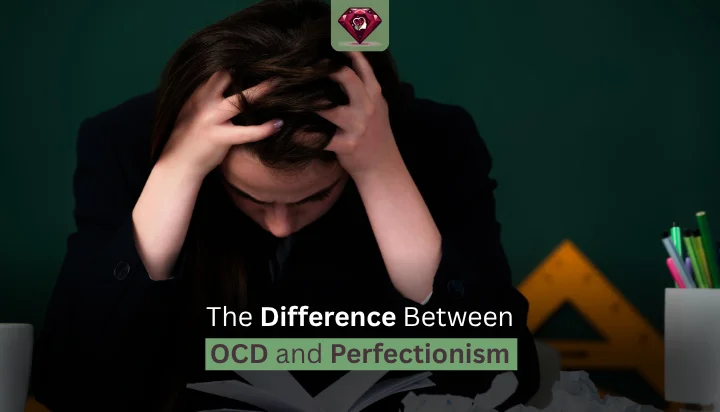
Do you ever double-check something or take the extra time to make sure everything is just right? These behaviors are typically written off as perfectionism, but sometimes they might be a sign of something more complex, like obsessive-compulsive disorder (OCD).
OCD and perfectionism can look quite similar at first glance, yet they differ in etiology, emotional repercussions, and effects on everyday life. Understanding these variations might help you determine when high standards are merely a personality trait and when they may be linked to a mental health condition.
In this post, we’ll discuss the fundamental differences between OCD and perfectionism, frequent symptoms of both, and when it may be time to seek professional help.
What Is Perfectionism?
Perfectionism is a character attribute. It’s the desire to do super high standards in different spheres of life. This drive is generally based on personal beliefs, a need for achievement, recognition, or a strong preference for order and quality.
This is not a diagnostic of mental health. It’s just a technique of approaching work and goals.
Healthy vs. Unhealthy Perfectionism
There are two sides to perfectionism:
- Healthy (adaptive) perfectionism: A source of inspiration, acute attention to detail, and a meaningful sense of accomplishment. This inspires, focuses attention on detail, and generates a real feeling of success. An artist might get a better job since they’re really passionate. Teachers can prepare as best they can to assist their students.
- Unhelpful (maladaptive) perfectionism: This is the hard one. It generally involves persistent self-criticism, a fear of making mistakes, and high expectations that can lead to procrastination or exhaustion. You could finish a great project and still feel unsatisfied.
Common indicators of perfectionism are:
- Setting tough or unrealistic goals
- Trouble distributing things (Because you’re the only one who can do them “right”)
- The feeling of not being fulfilled, even with good results
- Connecting much of your self-worth to successes and productivity
Perfectionism can take many familiar forms in our everyday lives. A parent may spend hours preparing a family get-together to generate great memories. A student might redo an assignment multiple times to show their best work. At work, someone can be working late to polish a report.
These behaviors can help you succeed, but when taken too far, they can lead to stress, burnout, and damaged relationships.
What Is Obsessive-Compulsive Disorder (OCD)?
Obsessive-compulsive disorder (OCD) is a recognized mental illness. It includes unwelcome, intrusive thoughts (called obsessions) that produce severe discomfort or suffering.
To relieve this anguish, people conduct repetitive actions or mental processes called compulsions.
This is what the OCD cycle normally looks like:
- An unpleasant addiction grips the psyche.
- Intense anxiety rises.
- A compulsion is carried out to relieve the fear.
- Temporary relief comes, then the obsession returns.
These behaviors can take up hours of the day over time and start to interfere with normal functioning.
Important note: OCD is not about being tidy or orderly. This is commonly incorrect in popular culture. Real OCD is about controlling unreasonable, often overwhelming worries. People with OCD don’t want to perform their rituals; they feel forced to since it seems impossible not to.
OCD is not a choice, but what you are. It can happen to anyone, of any age, of any background. It is often seen in people with anxiety or sadness.
Key Differences: OCD vs. Perfectionism
Perfectionism and OCD may appear identical on the surface, but they feel very different on the inside. Here is a clear comparison:
Thoughts
Perfectionism: Goal-driven and self-selected (“I want this to be excellent because it’s important to me”).
OCD: Unwanted. Intrusive. Distressing. Thoughts often feel foreign and include thoughts of danger, doubt, contamination, or sentiments of “not just right.”
Motivation
Perfectionism: Motivated by achievement, pride, approval, or self-satisfaction.
OCD: The desperate need, based on dread, to prevent some feared calamity.
Behaviors and Controls
Perfectionist: Generally flexible. Lots of people enjoy portions of the process and can take a step back.
OCD: Compulsions are felt as urgent and hard to resist. They follow stringent standards and take up a lot of time.
Emotional Experiences
Perfectionism: fleeting satisfaction or slight irritation.
OCD: Severe anxiety, guilt, dread, or crushing responsibility.
Impact on Life
Perfectionism: Also helps you succeed, but it also leads to burnout
OCD: Often interferes with relationships, job, school, and fundamental everyday duties.
There can be overlap; for example, some subtypes of OCD include “just right” sensations. The difference lies in the amount of distress, the intrusiveness of the thoughts, and the compulsive urge.
Common Myths and Misconceptions
Myth 1: All people with OCD are perfectionists.
Reality: Perfectionism is a frequent personality trait. OCD is a discrete clinical syndrome with obsessions and compulsions that create true impairment. Not all OCD sufferers are perfectionists, and not all perfectionists are OCD sufferers.
Myth 2: Perfectionism is always innocuous or even helpful.
Reality: Healthy perfectionism is a good thing, but maladaptive perfectionism can be a quiet killer of mental health, sleep, relationships, and happiness in achievement.
Myth 3: If you can stop doing the behavior, then it’s not OCD.
Reality: Many OCD sufferers are aware that their rituals are over the top and do battle with them. What counts is the inner battle and interference in life.
Dispelling these illusions minimizes guilt and opens up conversation in families.
Real-Life Examples and Scenarios
Picture two students doing their homework:
- Student A revisits tasks repeatedly, driven by pride in good work and a desire for good grades. They feel driven and can generally stop when necessary. (Perfectionism)
- Student B has unwanted thoughts such as, “What if I make a mistake that ruins everything?” They feel like they have to check over and over, for hours, lose sleep, lose time with friends. The terror is uncontrollable. (OCPD)
Inside the home:
One individual likes to tidy the pantry because they like to have a neat, pleasant place. Another is constantly checking locks and appliances, driven by acute anxieties that someone they love will be harmed.
These differences influence the family. When someone is caught up in draining cycles, loved ones may notice. Make space for kind, non-judgmental interactions where help can be given.
When to Seek Professional Help
Watch out when high standards start costing more than they are worth.
Perfectionism signals: Perpetual self-criticism, procrastination that stops development, or relationship issues stemming from unreasonable expectations.
OCD red flags: Behaviors that consume more than an hour each day, interfere with daily obligations, create significant distress, or lead to avoidance of key activities.
Early support helps with both. At Ruby Reflections Mental Health, we offer compassionate, individualized assessments. It takes strength, not weakness, to reach out.
Treatment and Support Options
Both difficulties can be addressed with the correct measures.
For the perfectionists:
- Cognitive-behavioral methods for changing unwanted thoughts
- Practices of self-compassion
- Mindfulness is to be present
- Flexible goal setting and recognition of progress
For OCD:
- Exposure and Response Prevention (ERP) therapy– the gold standard
- Medication when necessary
- Holistic supports, including lifestyle changes and family participation
General tips for everyone:
- Set up consistent self-care habits
- Develop home balanced standards
- Give rest and quality relationships priority
At Ruby Reflections Mental Health, we provide personalized counsel to help you find what works best for your life.
Conclusion
Both perfectionism and OCD include high standards, but are very different in thoughts, motivations, feelings, and influence on day-to-day life. Perfectionism is a good thing if you use it the right way. OCD is a condition that often requires specific support.
Understanding the difference, you become more self-aware, develop better behaviors, and are free to seek help without shame. You don’t have to do this by yourself.
Stop and think about what you’ve read. If it resonated, share it with someone who might need to hear it. Visit our site to find more resources or contact the compassionate team at Ruby Reflections Mental Health.
It’s progress, not perfection, that really drives us ahead. You and your family can enjoy brighter, calmer days.
FAQs
Is OCD and perfectionism the same thing?
No. Perfectionism is a personality characteristic. OCD is an anxiety disorder that is marked by anxiety-driven intrusive thoughts and compulsions.
Is perfectionism the same as OCD?
Perfectionism doesn’t necessarily develop into OCD, although extreme cases can overlap with anxiety disorders. A professional assessment can help clarify.
How can I tell if it’s OCD or just being a perfectionist?
The focus is on the thoughts and feelings. Perfectionism seems to be about value. OCD is an uncontrollable fear-based thing. If it seriously disturbs life, it should be assessed.
Is there a test for OCD vs. perfectionism?
No single test done at home will diagnose either. To comprehend, a qualified expert accurately employs interviews and proven instruments.