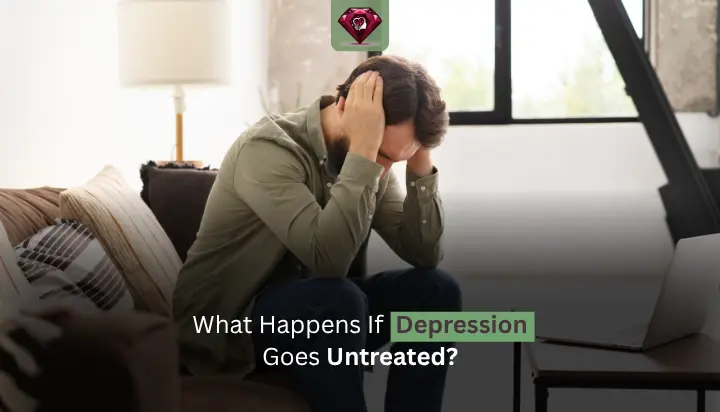
You wake in the morning feeling heavy with weight on your mind, perform the tasks necessary to get by, go through the motions, and say “it’s just a phase” or “I’ll feel better soon.” Weeks become months, and the weight doesn’t come down. It, rather, sinks gradually deeper. If you think you are alone, you are not! Many people believe that depression will resolve on its own and hide their symptoms rather than discuss their struggles. They often put on a brave face when it comes to depression, hoping it will pass away. However, untreated depression doesn’t remain constant; it tends to increase in its severity, affecting all aspects of life.
We recognize the impact of depression in the absence of treatment at Ruby Reflections Mental Health and how it can subtly change a person’s world. Fortunately, if you are aware of what you might encounter, there’s a way to heal.
How Untreated Depression Changes Day-to-Day Life
Early signs of depression may be an overall unmotivated state, boredom, or a general lack of energy about things you used to care about. These feelings tend to become deeper with the passage of time. Simple tasks can get overwhelming – texts, emails, cooking, getting out of bed, even these simple things. It is becoming more difficult to pay attention, make decisions, and happiness might not happen anymore.
Some people liken it to being behind a fog and seeing life going on around them, but feeling as though they’re out of it. Without attention, this can make it tough to keep their regular routines, work, or attend to family and friends.
The Emotional and Mental Impact Over Time
Untreated depression doesn’t just stay as a low mood. It can exacerbate a sense of helplessness, unworthiness, and guilt. These negative thoughts can intensify, occur more often, and make you feel bad about yourself for the reasons you cannot “snap out of it.” The depression seems to be heavier with this self-judgment.
Often, anxiety is one component of the equation, all while the person feels low on energy, running around with all kinds of racing worries. Sleep is increasingly irregular and may become more fragmented, resulting in even greater exhaustion of emotional resources. In the long run (months, years), depression can cause you to find it difficult to think of a brighter future if you do not get treatment.
The Physical Effects of Untreated Depression
Depression is real and not “all in the mind.” It spreads throughout the body. People often have a loss of appetite and gastrointestinal symptoms, non-specific aching and pains, or persistent fatigue and lethargy, which is not alleviated by sleep. The immune system can weaken, thus making one more prone to traditional colds and flu.
If not treated properly, the physical effects can cause further stress in people’s lives, making it even more challenging to get through each day. The mind and body are highly interconnected, and when a person suffers from depression, physical pain can feed into emotional pain, and vice versa.
How Untreated Depression Affects Relationships and Work
Depression can quietly strain the most important parts of life. It can cause emotional distance and leave partners feeling shut out and confused. Children may feel there is something amiss, although it has not been explained to them. Friends may slip away, as sometimes conversations may be only one-way, and plans are continually canceled.
Depression at work might manifest itself through lack of concentration, late performance, or absences. This may have implications for career advancement, limited financial security, and a lack of purpose. These changes can often increase guilt, leading to a deeper sense of depression.
The Importance of Addressing Depression Early
Untreated depression may become stronger with the passage of time. Fortunately, depression is very treatable regardless of its stage. The brain and nervous system are very malleable. Many individuals find a lot of relief and restoration of joy, energy, and connection with a certain measure of support.
Early attention not just alleviates suffering, but also precludes the potential for worse health effects, our relationships, and our functionality in the day-to-day. It is nothing to be ashamed of if you need help. Seeking assistance is one of the best things you can do for yourself and the people you care about.
Gentle Steps You Can Take If You’re Struggling
If you find yourself in any of these descriptions, then begin to manifest small actions and kindnesses:
- Talk to one person that you know and let them know how you feel.
- If you’re looking for a little action, aim for a little movement every day, such as a little walk, which can help support your body and mind.
- Try to create breaks in the day that are more structured, such as regular sleep routines and meal times, which can be helpful to create consistency.
- Talk to yourself with kindness as though you were a friend of a friend who is going through something.
These steps are suggestions to get you started. When paired with professional assistance, they are most effective.
When Professional Mental Health Support Makes a Real Difference
If sleep, relationships, work, or hope are being impacted by depression, professional assistance can help you end the cycle. Supportive psychotherapy can help you find a safe container to explore the emotions you may be feeling and create personalized coping tools. Balance is also restored with appropriate medication usage, if necessary, while learning new coping skills.
At Ruby Reflections Mental Health, we specialize in compassionate care for depression and its many forms. Individuals and families find relief from us with secure telehealth, supportive psychotherapy, and custom psychiatric evaluation. For anyone who’s experiencing depression, be sure to visit our special depression page and discover how we can help you emerge from it on your journey to being more yourself.
Conclusion
When left untreated, depression can unobtrusively alter your energy, relationships, health, and outlook on the future. However, it doesn’t need to stay that way. Depression can be treated, and getting treatment is a sign of bravery and self-care, and the right path to take in changing the trajectory of your life.
You are entitled to feel connected, alive, and hopeful! There is a way to heal, and there is help that’s available and non-judgmental. Don’t wait if you or someone you know is feeling overwhelmed; a call or note may be the first step to relief.
You can share this with anyone who may need it. At Ruby Reflections Mental Health, every time you are ready to take that step towards brighter days.
FAQs
What happens if depression is left untreated?
It may become deeper with time and may impact energy levels, relationships, job, sleep, and physical health.
Can untreated depression go away on its own?
While many people feel symptoms getting worse without treatment, mild cases often get better.
How does untreated depression affect relationships?
It can cause distancing, misunderstandings, and difficulties in the emotional bond, as there’s less emotional connection.
Is it too late to get help if depression has gone on for years?
No. It’s never too late. Many people experience significant improvement even after long periods.