
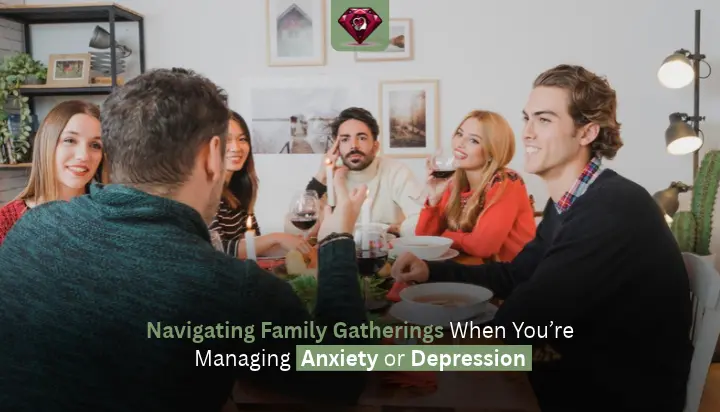
The invitation arrives, and a familiar mix of feelings follows. You want to visit family. You want to share a meal. You want to be in the moment. Another half feels a subtle dread: the noise, the questions, the pressure to be “fine,” or the concern that your anxiety or sadness will show up and be misread. If this tension sounds familiar, you’re not alone.
Family get-togethers may be both meaningful and exhausting, especially if you’re struggling with anxiety or depression. There is often a true inner battle between the social demands, the random interactions, and the urge to save your energy. The good news is that with a little forethought and soft limits, these occasions can be made a little more manageable without disappearing or forcing yourself into situations that leave you empty.
Why Family Gatherings Can Feel Especially Hard
Family activities are not without their share of obstacles. You might be dealing with large crowds, little privacy, long hours, and conversations about challenging topics. Anxiety can make physical symptoms such as feeling tense or restless worse when you are unsure of what will happen in a social situation or are concerned about what others may think. If you have depression, it may be exhausting to be upbeat or fully present when your energy is already low.
Other factors that commonly add to strain are:
- Pressure to explain how you’re doing or hide it
- Dealing with family ties that seem all-important or overwhelming
- Changes in sleep, meal, or quiet time habits
- The emotional toll of having to fit in but also needing space
The first step is to recognize these demands, without judging yourself. The struggle is not a personal flaw, but a normal reaction to a difficult social situation when your nervous system or energy is already low.
Preparing Before the Gathering
Preparation can take the edge off the experience quite a bit. Planning for your needs gives you a sense of agency and reduces the chance of feeling completely caught off guard.
A few useful preparatory steps are:
- Establishing a predetermined length of stay, and perhaps communicating that plan if it seems appropriate
- Identifying a quiet space or two that you can step into if you need a break
- Planning simple grounding or calming techniques that you can use discreetly
- Opting for clothes and logistics that foster physical comfort
- Practicing short, kind responses to typical questions about how you are doing in your mind
Preparation is not about controlling all outcomes. It’s about giving yourself tools and options so the day feels less up in the air.
Strategies for During the Gathering
Get there, and then the idea is to stay as regulated as you can while still engaging in ways that feel sustainable.
Some useful ways are:
- Taking a few minutes off when you feel tension building: a trip outside, a quiet restroom break, or a few minutes of focused breathing
- Choosing lighter or more manageable conversations and activities rather than straining yourself to participate in every interaction
- Subtle grounding methods such as feeling your feet on the ground or focusing on one sensory detail
- Permitting yourself to disengage from topics or behaviors that are triggering
- Periodically checking in with yourself regarding energy levels, rather than waiting until you are totally drained
These tiny acts of self-awareness assist in preventing overwhelm from accumulating, and increase the chances you’ll leave the gathering feeling steady rather than depleted.
Setting Boundaries with Kindness
Boundaries are one of the most protective strategies available when families gather. They don’t need conflict or extensive explanations. Often, calm, clear limitations are the most effective.
Here are examples of soft boundaries:
- “I’ll step outside for a few minutes.”
- “I don’t want to talk about that today.”
- “I’m leaving a little early so I can get some rest.”
- “I’m grateful for the invitation, and this is what works best for me right now.”
Your boundaries safeguard your energy and demonstrate self-respect. If given with warmth, they are more likely to be received as care, not rejection.
Caring for Yourself After the Gathering
The hours and day after a family gathering are as important as the event itself. A delayed surge of exhaustion, emotion, or self-criticism often hits people once the social energy is gone.
Supportive aftercare may include:
- Allow a little additional rest without feeling guilty
- Back to normal habits around sleep, meals, and quiet time
- A gentle reflection on what went well and what was difficult, without harsh judgement
- Reaching out to a trusted person if you need to digest the experience
- Don’t feel compelled to analyze or “fix” every interaction quickly
There are no ifs, ands, or buts about recovery time when you are dealing with anxiety or depression. It is part of sustainable family life engagement.
When Professional Support Can Help
If family gatherings often leave you feeling tired, triggered, or even alienated from yourself, professional support might provide extra tools and perspective. Therapy is a space to investigate the patterns of your family, to develop skills around setting boundaries, and to create techniques that work for you in social circumstances that feel difficult.
At Ruby Reflections Mental Health, we assist people in managing their anxiety and depression within the framework of real-life relationships and familial dynamics. We help people achieve more confidence and emotional resilience through supportive psychotherapy and secure telehealth.
It’s not always easy to be around relatives when you’re dealing with anxiety or depression. It wants you to stay connected and protect yourself at the same time. If you prepare, create clear boundaries, and follow up with aftercare, these experiences can be made more manageable and less costly to your well-being.
You don’t have to pick between your family and your mental health. Small, regular choices that honor your needs enable you to stay connected in ways that feel sustainable. Progress is not perfect performance at gatherings, but the growing ability to care for yourself and be present with the people that matter.
If this is something you can relate to, remember that there is help out there. Kindly forward this guide along to anyone who may benefit from it. We at Ruby Reflections Mental Health are available for you anytime you’re ready for more guidance.
FAQs
Why do family gatherings feel so draining when I have anxiety or depression?
Social pressure, interrupted habits, and emotional demands are often mixed, and this might drain an already sensitive nervous system or poor energy reserves.
Is it okay to leave a family gathering early?
Yes. It’s a healthy and valid choice to protect your energy. Short, nice communication will often suffice.
How can I respond when family members ask how I’m doing?
Simple, honest, and limited answers are good. You need not provide comprehensive explanations.
Can therapy help with family-related anxiety or depression?
Yes. Therapy can also help develop coping skills, boundary-setting, and emotional regulation within the framework of familial connections.