
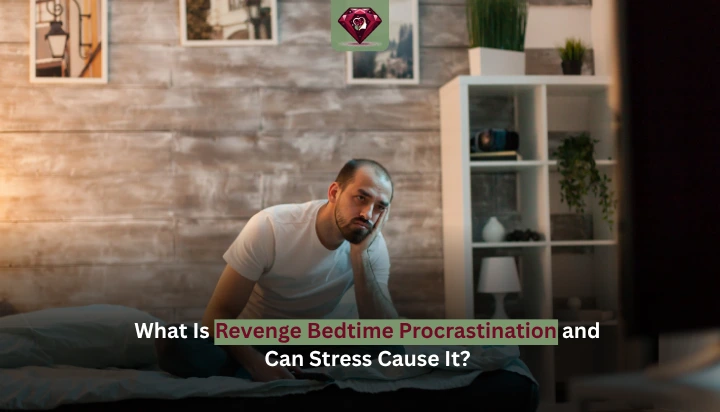
It’s late. The house is peaceful at last. Your to-do list is crossed off (or at least on hold till tomorrow). You know you should go to bed, but instead you open one more video, scroll a little bit longer, or nestle into a show. You’re not really that weary yet, or maybe you are, but the thought of turning off the lights feels like giving up. You know that tomorrow is going to be rougher. But the night seems the only time that is all yours.
If this rings a bell, you may be suffering from revenge bedtime procrastination. A tendency that many people living high-demand lives know silently well.
What Is Revenge Bedtime Procrastination?
Revenge bedtime procrastination is the conscious choice to stay up later or stay up later so that you can have some time to yourself after a day that mostly seemed dictated by duties. The “revenge” part is not about being angry with others. It’s about restoring a sense of autonomy, reclaiming hours that felt like they belonged to work, childcare, appointments, or the demands of others.
Research has described the broader concept of nighttime procrastination as going to bed later than planned when nothing external is preventing you, and despite being aware that the delay will likely cost you sleep. The “revenge” frame was popularized by a Chinese idiom, which roughly translates to “retaliatory staying up late.” It was extensively adopted when people realized the feeling of lengthy, regulated days with a protective lock on the late-night hours.
This is not only losing track of time, but it is also not sleeplessness. If you have insomnia, you want to sleep but can’t fall asleep or stay asleep. In the case of vengeance bedtime procrastination, you may sleep, but you don’t want to yet because the night feels like yours at last.
It often looks like this:
- Not wanting to prepare for bed even when you’ve decided it’s time
- Going to bed but surfing, viewing, or reading longer than you want to
- Feeling protective of those late hours and reluctant to end them
- Recognizing that tomorrow will be worse, but continuing the pattern
Can Stress Cause Revenge Bedtime Procrastination?
Yes. One of the biggest contributors is stress.
The nervous system is stimulated when the days are filled with demands. There is little free time just to be you, not performing, creating, or responding. By dusk, the longing for a little freedom gets stronger. When your day is full with responsibilities, staying up late may seem like the only way to get that need met.
Stress also depletes the cognitive resources needed for self-regulation. At the end of a demanding day, decision-making energy is low. The longer-term advantage of sleep is trumped by the short-term benefit of “a little more me time”. Screens make this even easier, offering endless low-effort stimulation that feels like relief in the moment.
A cycle can be created over time. Stressful days make it hard to fall asleep on time. Less or worse sleep makes the next day seem more daunting. This leads to more tension, which in turn makes you want to stay up late again. An occasional late night can become a regular trend that gradually increases stress levels overall and decreases resilience.
Other Factors That Contribute
Stress is seldom the only piece. Other frequent factors are:
- A strong impression that the hours of the day are not entirely yours (job schedules, caring, constant availability)
- Difficulty getting out of “on” mode or winding down
- An evening inclination (a natural night-owl tendency that is at odds with early morning requirements)
- The sensation of a sudden halt in normal screen use
- Conditions like ADHD or anxiety that impact regulation and energy and may contribute to the attraction of late-night stimulation
None of these signify something is “wrong” with you. They point to a mismatch between the structure of the day and human needs for autonomy, healing, and pleasure.
How Revenge Bedtime Procrastination Affects Sleep and Mental Health
Sleep is not optional time off. It also helps to regulate mood, balance emotions, focus, and deal with stress. When late nights often cut into sleep, people often see:
- Increased irritability or emotional reactivity
- Trouble thinking clearly or making decisions
- More feeling bogged down
- A stronger pull toward the same late-night habits the following evening
If you already suffer from anxiety, depression, or ADHD, the pattern can make a bad situation worse. Sleep problems and high stress create a vicious cycle. In terms of dealing with procrastination, it’s not just about “better sleep hygiene.” It’s about protecting mental health capacity.
Practical Ways to Shift the Pattern
The idea is not to take the fun out of the night. It’s about having the personal time sooner and more consciously so the late-night version isn’t needed as much.
- Schedule a few minutes of “me time” first thing in the morning or last thing at night. Even some protected time can reduce the sense of scarcity at night.
- Make a clear transition to show the day is ending. Or maybe it’s turning down the lights, charging the phone outside the bedroom, or completing a little low-stimulation exercise.
- Let the winding-down period be something to look forward to, not work. A warm beverage, some reading, light stretching, or journaling can seem like a treat, not a shutdown.
- Schedule stop times in advance, when your self-control is at its peak. It is easier to follow a pre-set ending point than to make up one on the fly.
- Rise at the same time. This allows the body’s natural drowsiness to build up at a more predictable time the next night.
- Try to get to the wider picture wherever feasible. Making work more available, requesting help with caring, or lowering responsibilities in the evening can help break the cycle of pressure that sustains it.
Small changes over time seem to work better than trying to repair everything all at once.
When to Reach Out for Extra Support
Getting professional help can be useful if the pattern feels fixed, is having a major impact on your mood or day-to-day functioning, or is linked to ongoing stress, worry, low mood, or sleep problems. A mental health specialist can look at the whole picture stress load, sleep patterns, any underlying issues and help you develop techniques that work for your life.
Here at Ruby Reflections Mental Health, we are here to help those dealing with stress, sleep issues, anxiety, ADHD, and more through telemedicine and full care. When that late-night cycle is part of a bigger picture, medication management, supportive therapy, and practical methods can all be part of the solution.
Revenge nighttime procrastination is not laziness or a failure of willpower. Often a hint that there isn’t enough room for rest or choice or simply enjoyment throughout the day. When people recognize the impact stress plays and intentionally create room for personal time earlier, they find they can safeguard both their nights and their sleep.
If you’re feeling run down from late nights and never-ending worry, there’s help. Talking with a provider might help you think about possible next steps that work for your life. Ruby Reflections Mental Health provides safe telehealth solutions to meet you where you are.
FAQs
Is revenge bedtime procrastination the same as insomnia?
No. Insomnia is when you cannot get to sleep or stay asleep, even when you want to. Revenge bedtime procrastination is when you deliberately stay up later than you had planned to get some time to yourself.
Can stress alone cause it?
Stress is a big factor, especially when there isn’t much autonomy in your day. It usually interacts with other factors such as schedule pressures, self-regulation skills, and screen habits.
Will better sleep hygiene fix it by itself?
Sleep regimens are helpful but work best when the underlying demand for personal time and control is also treated. When we look at merely the night, we typically leave the pressure of the day unchanged.
When should I talk to a professional?
If you find the pattern is frequent, leaves you feeling drained, or is related to larger stress, mood, or concentration problems that feel hard to deal with on your own, consider reaching out.