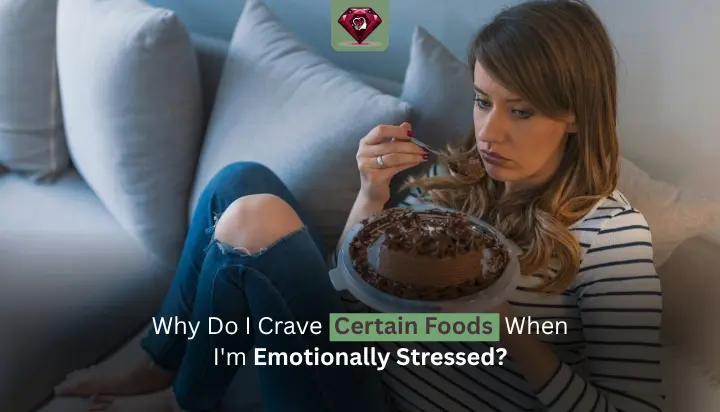
You had a rough day. Maybe work piled up, a conversation disturbed you, or that ball of anxiety nestled in your chest. You’re suddenly miles away from thinking about a balanced dinner and truly want something sweet, salty, crunchy, or creamy. Chocolate, chips, ice cream, spaghetti foods that feel soothing in the moment. If this sounds like you, you are not alone, and you are not lacking willpower.
This is normal when emotions are running high. Knowing the reason behind them can help you respond with more self-compassion and mindfulness instead of resentment. There is a real biological link between our feelings and what we reach for, and it can be addressed.
The Biology of Stress Cravings
Acute stress (e.g., a sudden argument) or continuous stress (e.g., work pressure, relationship tension, or ongoing worry) activates your body’s stress response system. It involves the hypothalamic-pituitary-adrenal (HPA) axis, which releases cortisol, the so-called stress hormone.
Cortisol makes energy available, getting the body ready for action. In primitive contexts, stress typically meant physical danger or lack of resources; therefore, the body increased hunger for calorie-rich meals that could supply fast energy. Many stressors today are emotional or psychological, yet the same system still fires. Elevated cortisol can enhance hunger and increase inclination for foods heavy in sugar, fat, or both.
At the same time, stress can influence brain reward pathways. Highly appealing foods (those that are naturally high in sugar, fat, and salt or made to be) activate the release of dopamine, a neurotransmitter associated with pleasure and reinforcement. Eating them gives a brief sense of relief or satisfaction. Your brain soon learns this association: stress enters, eating provides short-term relief, so the next time tension arises, the craving is there.
Carbohydrates may also have a role for some. Some foods that are high in carbohydrates may help make tryptophan, an amino acid that helps make serotonin. Serotonin helps regulate mood, so that momentary boost might be especially enticing when emotions are low or disturbed. Research into comfort eating, including studies that build on theories by experts such as Mary Dallman, suggests that eating certain foods can decrease portions of the stress response, generating a biological feedback loop that supports the behavior in the short term.
And stress, if it’s long-term, can alter how the brain reacts, as well. Studies show that long-term stress can diminish the brain’s natural ability to sense when it’s full or reduce the reward signals from food, making it easier to keep eating when you’re physically no longer hungry. So the craving is not just “in your head.” This has to do with hormones, neurotransmitters, and learning habits that arose as survival mechanisms.
Why Certain Foods Feel Especially Appealing
Not every food hits the same. Stress has a way of pushing people toward certain types:
- Sweet, high-fat foods (chocolate, ice cream, cookies, pastries) give a quick dopamine hit and can feel soothing. The combination of sugar and fat is particularly rewarding to the brain’s pleasure centers.
- Salty, crunchy foods (chips, pretzels, crackers) satisfy sensory needs. Chewing and crunching can also be a physical release of tension. This has been described as a kind of displacement behavior, when emotional energy is temporarily redirected.
- Carb-heavy comfort foods (pasta, bread, mashed potatoes) may be connected to childhood, or provide that short-term mood lift associated with serotonin.
- ‘Comfort’ or nostalgic foods that bring back positive memories (a certain food a parent made, something eaten in better times) have emotional significance beyond their nutritional value. Eating them can briefly recreate a sense of safety or care.
These preferences aren’t random. They are affected by biology, by experience, and by the ability of a food to provide rapid sensory and emotional satisfaction.
The Cycle of Emotional Eating
The pattern often looks like this:
- An emotional trigger appears (stress, anxiety, sadness, boredom, loneliness, or even overwhelm).
- Cortisol rises and reward-seeking increases.
- A craving for specific foods surfaces.
- Eating (which provides short-term relief in the form of dopamine, sensory pleasure, or distraction).
- The brain makes the connection between the emotion and the food stronger.
- Guilt, physical discomfort, or unresolved emotions may arise later on and reignite the cycle.
This explains why emotional eating can be instinctive. It’s not a character flaw; it’s a learned coping method that had a function once. But over time, using food to cope with feelings might not solve the underlying stress or emotional needs and could cause other problems with mood, energy, or physical health.
When Stress Cravings Signal Something Deeper
It’s normal to comfort eat now and again. If it feels out of control, happens often, makes you feel worse after it happens, or starts to interfere with how you want to live and feel, that’s more worrying. It may occur with anxiety, sadness, trauma responses, or difficulties controlling emotions. In these cases, the food is often trying to soothe something that needs more targeted support.
If you notice patterns, such as eating in secret, feeling tremendous guilt afterward, or using food as your primary means of coping with emotional feelings, it may be worth discussing this with a mental health professional. At Ruby Reflections Mental Health, we deal with patients who are experiencing different eating disorders related to mood, stress, and behavior through complete examination, treatment, and, when appropriate, medication management.
Practical Ways to Respond Differently
You don’t have to cut off comfort foods or white-knuckle every craving. The idea is to have more awareness and more skills so that eating is not the only option. Many people find the following tactics helpful:
- Pause and check in. When a craving hits, take a short pause. Ask yourself: Am I physically hungry, or is something emotional present? Naming the feeling (“I’m anxious,” “I’m lonely,” “I’m exhausted”) can reduce its intensity and create a little space.
- Build regular, satisfying meals. Skipping meals or going extended periods without adequate eating can intensify both physical hunger and emotional cravings. Make sure to have regular meals that are high in protein, fiber, and a little bit of healthy fats to help stabilize energy levels and lessen vulnerability to severe cravings.
- Develop alternative soothing strategies. Try things that directly address the feeling: a quick walk, deep breathing or box breathing, contacting a friend, writing in a notebook, a warm shower, stretching, or listening to music. The trick is to have options available so the brain has different methods to get relief.
- Practice mindful eating when you do eat. Sit down, turn off distractions, and pay attention to taste, texture, and fullness cues. This can boost contentment and help differentiate between emotional cravings and actual hunger.
- Control the stress itself. Total cortisol reactivity can be lowered by time, short mindfulness exercises, movement, appropriate sleep, and putting small boundaries around stressors. Addressing or taking practical steps to the causes of stress can often reduce the frequency and severity of food cravings
- Eliminate Temptation, Not Deprivation. It can be helpful to keep highly triggering foods out of reach while allowing yourself to enjoy favorite foods. Extreme restraint often backfires, creating cravings.
- Track patterns gently. A basic record of what you ate, at what time, and how you were feeling can uncover links without being restrictive or self-critical.
Progress is rarely linear. Some days the old pattern will win, and that’s okay. Being kind to yourself is more conducive to supporting lasting change than harshly judging yourself.
How Professional Support Can Help
Knowing the ‘why’ is powerful, but frequently it’s easier to change long-standing practices with assistance. Therapy can help you learn to manage your emotions, identify triggers more readily, and build coping methods that work for you.
Interventions that include a cognitive behavioral component, mindfulness, or trauma-informed therapy are useful for emotional eating. A full psychiatric evaluation can help clarify the situation and offer more alternatives for help when anxiety, depression, or other problems are involved.
At Ruby Reflections Mental Health, we offer personalized care that considers the whole person mind, body, and everyday life. Our team provides consultation, psychotherapy, and medication management with a focus on courteous, culturally competent care. We provide support for a range of eating-related concerns and eating disorders. We provide telehealth for patients in many states, and in-person where accessible.
If stress-related food cravings are taking up too much brain space or impacting your well-being, speaking out is a good next step. You deserve tools that will truly help you feel better in sustainable ways.
Final Words
Stress-induced emotional eating is a common experience for humans, and it’s in our wiring in our brains and in our bodies. You can opt to respond to your feelings in ways that more accurately match the methods you wish to use to care for yourself, with more clarity and real-world help. If you want help investigating these patterns more, Ruby Reflections Mental Health is here to help.
FAQs
Is craving comfort food when stressed a sign of weakness?
No. It reflects normal biological and psychological processes that developed for survival and emotional regulation. Awareness and new skills are more useful than self-criticism.
Why do I specifically want sugar or carbs when I’m stressed?
These foods can provide a quick energy signal and temporary boosts in feel-good brain chemicals like dopamine and, for some, serotonin-related effects. They also often carry emotional associations of comfort.
Can I still enjoy my favorite foods?
Yes. The aim is not restriction or elimination, but expanding your options so food is one possible response rather than the automatic one.
When should I seek professional help?
Consider reaching out if the pattern feels hard to manage on your own, is linked to significant distress, guilt, or other mental health symptoms, or is affecting your health and quality of life.