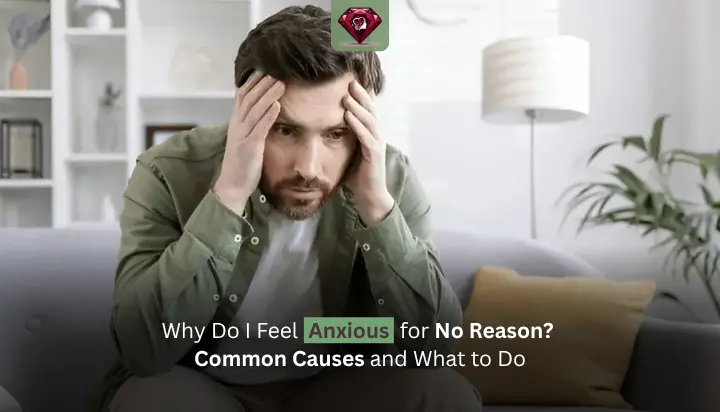
It can be puzzling and upsetting to feel anxious without any apparent reason. There may be nothing wrong, but your mind and body may be responding to concealed stress, past traumas, or underlying anxiety.
At Ruby Reflections Mental Health, we’re here to help you understand why this happens, what it could indicate, and practical techniques to manage anxiety and go back to calm.
What Feeling Anxious for No Reason Really Feels Like
Sometimes the anxiousness can just come out of the blue. You can feel your body tighten, your breathing becoming shorter, or your mind fill with hazy anxieties that repeat themselves without any distinct emphasis. You may feel restless, anxious, or abruptly overwhelmed by simple things. Sometimes anxiety manifests as bodily symptoms: a tight chest, butterflies in the stomach, or a racing heart even when your day has been rather typical.
The weird thing is there’s no apparent cause. Logically, you know nothing is wrong at this point, yet your nervous system reacts as if there is danger nearby. Because you think one thing but you feel something else, and it can be a source of doubt or frustration, and then that can lead to the anxiety.
The first step is to be aware of this trend rather than criticize it. Your body isn’t out to get you. It’s responding to cues it has learned over time.
Common Causes Behind Seemingly Random Anxiety
Almost all anxiety that seems to come “out of nowhere” has a cause even if it is not immediately apparent. Here are some of the most frequent contributors:
Built-Up Stress from Daily Life
Even if things seem okay on the surface, little, persistent pressures deadlines at work, parenting responsibilities, money woes, or the never-ending barrage of tasks can pile up. Your nervous system remains in a low-level alert state, and anxiety can arise when there’s a quiet moment with nothing to distract it.
Unresolved Emotional Patterns
Even minor past experiences can train the brain to be on alert. Emotional neglect, high-pressure environments, or times of uncertainty can leave the nervous system vulnerable to perceived threats, even in secure situations.
Physical Factors That Influence Mood
Sleep disruption, irregular meals, dehydration, or hormonal shifts can all heighten anxiety. When the body is out of balance, the mind often follows, creating feelings of unease that seem to come from nowhere.
Habitual Thought Patterns
The mind can be trained to look for problems, or to replay worrying thoughts. Gradually, this mental checking becomes automatic, activating anxiety even when there is no problem to be solved at the moment.
These factors often overlap, producing a loop where anxiety seems unexplained but is perfectly understandable once you look deeper.
Why Anxiety Can Feel Like It Comes from Nowhere
Your nervous system is built to protect you. But it can be over-sensitized by prolonged stress and uncertainty. It begins to ring alarm bells more readily, even at safe, routine times. This defensive system is useful in true danger, but when it is “on” too long, it can fire at inappropriate moments.
But the brain too learns from experience. If anxiety has helped you to avoid problems in the past (by prompting action or vigilance), it can become a default response. Over time, the connection between a calm moment and a sudden anxious feeling becomes stronger, making the anxiety feel random.
The good news is, the nervous system is adaptable. With awareness and gentle practice, you can teach it new, calmer responses.
Gentle Steps You Can Start Using Today
You don’t have to change your life to feel better. Small, consistent activities can help to soothe your nervous system and lessen unexplainable uneasiness.
Pause and name what you notice.
When anxiety goes up, notice it: “I feel anxious now.” This tiny act of awareness might build a little space between you and the feeling.
Use quick grounding techniques.
Place your feet on the ground or notice five items you can see, or take a few calm breaths to ground yourself. These activities are a reminder to your body that you are safe right now in this instant.
Build small daily anchors.
Short walk, a quiet cup of tea, or a few minutes of deep breathing can help you feel more settled overall.
Speak to yourself with kindness.
Instead of berating yourself for having anxiety, try using loving words to yourself like “This is uncomfortable, but I’m here, and I’m safe.” Compassion diminishes the secondary stress that feeds worry.
These are kind places to begin. They are more beneficial when used regularly and combined with support if anxiety gets overpowering.
When Professional Mental Health Support Makes a Real Difference
If you are experiencing anxiety that seems to come from nowhere and is negatively affecting your sleep, relationships, work, or sense of tranquility, professional support can help you understand the underlying patterns and build permanent strategies. Supportive psychotherapy gives you a secure place to explore what’s happening and to develop tools that are unique to you. A personalized mental evaluation could help to clarify if medication or other therapy would be effective.
We at Ruby Reflections Mental Health provide compassionate anxiety care and the many ways it presents itself in your daily life.Telehealth that’s safe and personalized therapy to bring people relief. Visit our dedicated anxiety support to learn how we can help you on the road to feeling calmer and more at peace.
Conclusion
It’s puzzling and exhausting to feel nervous without knowing why. But it’s not uncommon, and it can be treated. It is typically based on understandable patterns of the neurological system conditioned by stress, experience, and the pressures of daily life. Good news is that your mind and body may learn new methods to feel safe and grounded.
With awareness, gentle daily practices, and support as needed, many people find a large reduction in unexplained anxiety and a greater sense of calm and presence. You deserve to be more comfortable with your own life.
If this sounds familiar, please know you are not alone, and help is available. Please share this guide with anyone you think may need it! We’re here at Ruby Reflections Mental Healthwhenever you’re ready to take the next step toward feeling calmer and more connected to yourself.
Related Posts:
- How Should I Handle Stress Before It Turns into Anxiety or Depression?
- Why High-Functioning Anxiety Often Goes Undetected in Adults
FAQs
Why do I feel anxious for no reason?
It is normally caused by accumulated stress, a sensitive nervous system, or learnt reactions that create worry in calm situations.
Is feeling anxious for no reason normal?
Yes. Many people experience it, and it is a common signal that your nervous system needs support and care.
Can anxiety without a clear cause go away?
Yes. Yeah. A lot of people make a lot of progress with mindfulness, gentle practices, and expert help if they need it.
When should I seek professional help for unexplained anxiety?
If it interferes with sleep, relationships, work, or daily joy, reaching out is a wise and caring step.