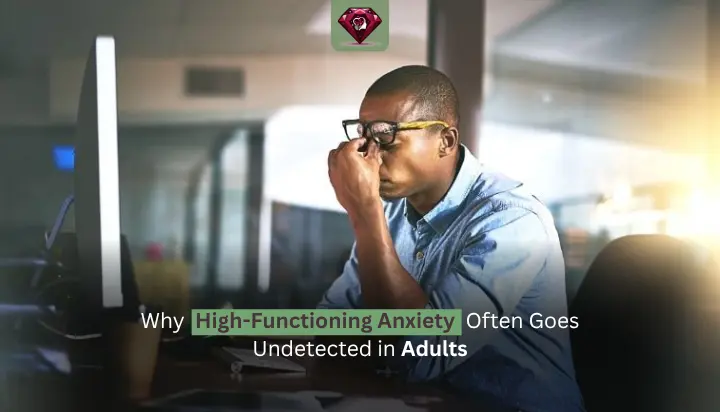
High-functioning anxiety is often neglected because it is masked by skill. Someone can appear organized, reliable, and successful on the outside, and people might describe them as “driven” or “put together. Inside, however, it can be quite a different experience. Many adults have a persistent mental pressure, overthinking, and emotional tension that never totally goes away, even when they rest.
Because of this discrepancy between outer performance and internal experience, high-functioning anxiety is often missed for lengthy periods of time. It’s crucial to recognize that worry isn’t always a sign of suffering; it may also look like achievement and steady production.
What Is High-Functioning Anxiety?
High-functioning anxiety isn’t a clinical diagnosis, but it is a common enough phenomenon where someone feels chronic anxiety, but can function well in daily life.
Instead of making a person slow down, it typically causes them to overperform. People may turn to organization, planning, and accomplishment as a way to cope with inner distress. On the outside, they may appear very competent, but often they are under a lot of emotional pressure within.
It is generally characterized by chronic concern, trouble unwinding, a fierce desire for control, and the internal conviction that they need to keep going no matter how tired they are.
The important thing is that you can be operating fine on the outside, but it doesn’t mean that you are doing well emotionally on the inside.
High-Functioning Anxiety vs General Anxiety
General anxiousness is usually more apparent. This might lead to avoidance, panic symptoms, or problems with daily functioning. It can interfere with functioning quite a bit.
High-functioning anxiety, on the other hand, typically does the opposite. It doesn’t stop a person; it inspires them to keep going.
Many people with high-functioning anxiety still fulfill expectations, take on responsibility, and perform well in professional or academic environments. But inwardly, they may feel they are always tense, intellectually fatigued, or emotionally overloaded.
This is the very difference that makes it so often missed. The external behavior does not match the inner experience.
Why High-Functioning Anxiety Often Goes Undetected
That’s one of the reasons high-functioning anxiety is invisible: success and struggle are happening at the same time. This is confusing for the person himself and for the people around them.
Life seems “managed,” so no one questions the emotional cost.
Productivity Masks Emotional Struggle
Many high-functioning anxiety sufferers are occupied nearly all the time. Keeping busy can feel like a method of controlling things or keeping worried thoughts away.
Eventually, production isn’t simply a habit; it’s a coping method. The internal stress is often not seen by others as long as the chores get done. It supports the illusion that all is well, even when things don’t feel well on the inside.
Cultural Normalization of “Being Busy”
In many settings, busyness is considered acceptable or even desirable. Success, desire, or discipline are typically connected with a constant state of activity.
Thus, chronic stress can be viewed as the usual pressure of life and not as an indication of worry. It is more difficult to tell when the internal burden has become unhealthy when everyone is busy.
Internalized Expectations and Perfectionism
One of the big factors in high-functioning anxiety is the pressure you put on yourself. Many people have very high personal standards and feel uncomfortable when they are not succeeding or developing in some fashion.
They may see it as a failure, a lack of effort, instead of understanding the emotional toll. This makes people work harder rather than slack off, which keeps the cycle running.
Emotional Minimization and Self-Doubt
Individuals with high-functioning anxiety tend to downplay their own emotional experiences. They may even push off feelings of being overwhelmed with thoughts such as “I need to cope better” or “Other people have it worse than me”.
This pattern results in delayed awareness. If distress is always reduced, it is more difficult to tell when support is genuinely needed.
Common Signs of High-Functioning Anxiety in Adults
High-functioning anxiety typically goes undetected, but you can see similarities in the way someone feels, thinks, and behaves.
- There is typically a feeling of inner emotional strain that doesn’t quite go away. A person may feel quickly overwhelmed, agitated, or emotionally “on edge” even in calm surroundings. The mind is still humming, so the rest doesn’t feel real rest.
- Overthinking is a persistent background noise in your mind. People may rehash conversations, guess what will happen, and second-guess decisions. Simple choices can feel heavy mentally out of dread of mistakes or of not doing things “correctly.”
- Physically, the body often shows the stress that is being held in. This can be constant tiredness, muscle stiffness, problems sleeping, or regular headaches. “Even if you sleep, you might wake up not feeling refreshed.
In everyday life, high-functioning anxiety might manifest as overpreparing for situations, straining to say no, feeling guilty about resting, or being outwardly calm but internally overwhelmed.
The Hidden Cost of High-Functioning Anxiety
High-functioning anxiety can go undiagnosed for years because it doesn’t necessarily interfere with day-to-day functioning. But the internal cost increases over time.
A lot of people begin to experience emotional exhaustion. Even little things feel overwhelming. The nervous system is always on alert, and it is difficult to achieve real relaxation.
Emotional resilience might also decrease. Once manageable things may now feel exhausting or hard to handle. Not because the person is any less capable, but because their inner system has been under strain for a long time.
Relationships can suffer too. Someone can be physically there and emotionally absent due to long-term mental drain.
Why People Don’t Realize They Have It
One of the key reasons high-functioning anxiety can often go unrecognized is that it feels normal to the person experiencing it. If someone has lived with this pattern for a long time, they may think this is just how life feels for all people.
There is a comparison. Individuals may feel fine because they are still managing responsibilities when comparing themselves to others who are more visibly struggling.
This makes a blind spot. Even when there is internal distress, emotional well-being is confused with well-functioning.
How High-Functioning Anxiety Affects Daily Life
High-functioning anxiety affects everyday life in small but constant ways.
People at work or school may overcommit to responsibilities, feel uncomfortable delegating tasks, or place intense pressure on themselves to perform perfectly. Even success is no relief, because the internal expectation moves on to the next task.
Sometimes it’s not simple to relax at home. Sometimes the brain keeps going even if you’re not working. Maybe it’s thinking about things you didn’t get done or things you have to do.
In social situations, people can come across as engaged and self-assured, but afterwards, they may feel drained because of the constant self-checking and mental effort.
When High-Functioning Anxiety Becomes a Concern
High-functioning anxiety becomes more of a concern when it begins to compromise emotional stability, physical health, or quality of life.
This can be a constant mental depletion that does not go away after sleeping, trouble relaxing without feeling guilty, increased irritation, or persistent sleep problems. Some people also say they get caught in loops of overthinking that are hard to escape.
Now it is not about performance. It’s about what the neurological system is doing with the continual internal tension.
How Therapy Can Help High-Functioning Anxiety
Therapy can be helpful in that it addresses the underlying experience behind the external functioning.
Therapy isn’t about productivity or symptom control, but an understanding of the patterns fueling the anxiety. This may entail studying mental processes, emotional reactions, and stressors.
It also helps to regulate the neurological system, allowing the body and mind to get out of constant alert. Over time, people can adopt less healthy ways to cope with strain than overthinking or overworking.
Therapy doesn’t allow someone to be “fine,” to perform, to maintain the illusion that they have it all together, which may be so freeing to those who are always holding it together.
Gentle Ways to Start Managing High-Functioning Anxiety
High-functioning anxiety doesn’t require drastic change. It often begins with awareness and small changes in daily habits.
That may involve learning to identify when you’re beginning to ruminate and sensibly stopping the process, allowing yourself to take a break without guilt, and reducing the internal pressure to be productive all the time.
It can also help to create little breaks in the day where the mind is not thinking about tasks or performance. These small changes can accumulate over time to relieve internal tension and promote emotional balance.
Conclusion — Functioning Well Does Not Mean You Are Fine
High-functioning anxiety is often ignored because it is masked by success, responsibility, and constant productivity. Everything might appear all right on the outside, but inside, there is constant mental and emotional pressure.
What matters is this: doing well does not mean that someone is automatically doing emotionally well.
It is not about pathologizing normal life stress or labeling it. It’s about knowing what’s been happening internally and accepting that support is okay, even if someone is still “coping.”
At Ruby Reflections Mental Health, we offer comprehensive psychiatric evaluations to help uncover underlying issues and support accurate diagnosis and care planning.
With awareness, support, and slow change, we can move away from the constant internal pressure and towards a more balanced and sustainable way of living.
Related Posts:
FAQs
Is high-functioning anxiety an official diagnosis?
There is no such clinical diagnosis as high-functioning anxiety. But it’s a common pattern to describe constantly anxious people, yet somehow manage to do their everyday duties and appear successful on the outside.
Can someone have anxiety and still be successful?
Yes. Many adults with anxiety are still successful in their careers, education, and personal lives. Internal emotional distress does not preclude high achievement.
How is high-functioning anxiety managed or treated?
Often, it is managed through therapy, being aware of thought patterns, stress regulation techniques, lifestyle changes, and learning healthier ways to cope with internal pressure and overthinking.